
Hands That Help: Building Independence in LKG & UKG Children
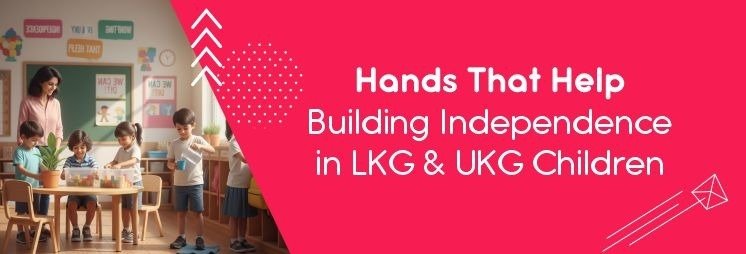
In the early years of education, academic learning is important but independence is transformational. For children in LKG (Lower Kindergarten) and UKG (Upper Kindergarten), learning how to manage simple daily tasks builds confidence, responsibility, and emotional strength. At this stage of preschool child development, self-help skills are not “small” achievements. They are foundational life skills that shape a child’s identity and sense of capability. As I often emphasize in my work with early learners, independence is not taught through pressure it is nurtured through patience, repetition, and trust. Why Independence Matters in LKG & UKG Between ages 3 to 6, children are naturally wired to say, “I can do it!” This developmental phase is crucial for early childhood independence. When adults step back appropriately, children step forward confidently. Developing self-help skills for pre-schoolers supports: These are essential school readiness skills that prepare children not just for Grade 1, but for life. If you’ve read my insights on [Teaching Kindness and Respect in Everyday School Life], you’ll understand that independence and responsibility go hand-in-hand. When children care for themselves, they learn to care for their environment and others too. 1. Dressing Independently: Small Steps, Big Confidence One of the first milestones in independence in LKG children is dressing themselves. Skills to Encourage: These actions strengthen fine motor skills and hand-eye coordination. More importantly, they send a powerful message to the child: “You are capable.” Practical Tips for Parents: Remember, perfection is not the goal participation is. When children dress independently, they walk into school with pride. This confidence positively impacts UKG child development, especially in social situations. 2. Eating Independently: Building Responsibility and Focus Naming emotions reduces emotional intensity. Research in early childhood psychology shows that when children Mealtime is a powerful opportunity to build life skills for kindergarten. In LKG and UKG, children can: Encouraging independent eating supports: Parents often worry about mess. But a little spilled rice today leads to a confident, self-sufficient child tomorrow. To further understand how routines shape behaviour, you may explore [Cold Days, Busy Minds: Keeping Your Pre-schooler Engaged Indoors] where structured activities build both discipline and independence. 3. Tidying Up: Responsibility Begins Early Teaching children to tidy up after play is one of the most impactful school readiness skills. Simple habits include: Tidying teaches: In classrooms, children who practice tidying adapt better to structured routines. At home, it reduces dependency and builds discipline. When parents consistently encourage clean-up routines, they actively strengthen early childhood independence. The Psychological Impact of Self-Help Skills From a developmental psychology perspective, the ages of LKG and UKG align with a critical stage described by Erik Erikson as Autonomy vs. Shame and Doubt. If children are given opportunities to try, fail, and try again, they develop autonomy. If constantly corrected or over-assisted, they may develop doubt. This stage directly influences: Thus, fostering self-help skills for pre-schoolers is not about convenience—it is about character building. How Schools and Parents Can Work Together For holistic preschool child development, consistency between home and school is essential. Schools Should: Parents Should: When home and school align, children thrive in their UKG child development journey. Common Mistakes That Delay Independence Even well-meaning parents sometimes unintentionally slow down independence. Avoid: Independence takes time. It grows gradually through repetition. Long-Term Benefits of Early Independence Children who master life skills for kindergarten show: Independence developed in LKG becomes leadership in higher grades. It also prepares children for structured learning environments, as discussed in [Why Preschool Friendships Feel Intense and How Parents Can Help], where emotional security and independence work together. Practical Daily Routine for Building Independence Here’s a simple structure parents can implement: Morning Routine After School Evening Consistency is the secret. Final Thoughts: Hands That Help Build Strong Minds When we allow children to button their shirts, wipe their plates, or stack their toys, we are not just teaching tasks we are shaping identity. Independence in LKG children is the foundation of resilience. Self-help skills for pre-schoolers create confident learners. Early childhood independence leads to lifelong capability. As educators and parents, our role is not to do everything for children but to equip them to do things for themselves. Because the hands that learn to help themselves today become the hands that lead tomorrow.
Little Hearts, Big Feelings: Teaching Toddlers to Understand Emotions
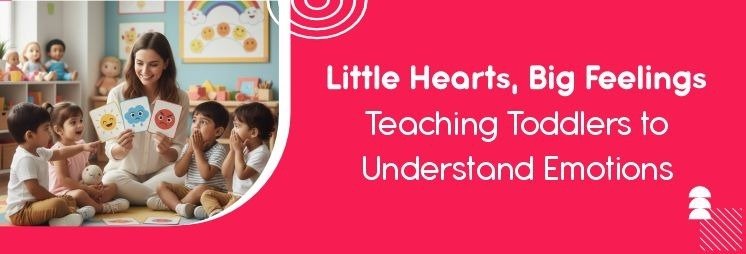
Featured Snippet Optimized Introduction Teaching toddler’s emotions means helping them recognize, name, and safely express their feelings through consistent guidance, modelling, and emotional validation. Emotional development in toddlers begins between ages 1–3, when children experience strong emotions but lack the language to manage them. By teaching toddlers emotions early, parents and educators build emotional intelligence, reduce tantrums, and support healthy brain development. Toddlers feel deeply. Their joy is loud. Their anger is explosive. Their sadness can appear suddenly. Teaching toddlers emotions is not about stopping these feelings — it is about guiding emotional development in toddlers so they learn to understand and express feelings safely. Emotional development in toddlers forms the foundation for emotional intelligence for kids. When children learn emotional awareness early, they grow into confident learners, empathetic friends, and emotionally secure individuals. Why Teaching Toddlers Emotions Is Essential Emotional development in toddlers directly impacts: During toddlerhood, the emotional brain develops faster than the reasoning brain. This is why toddler tantrum management becomes a common challenge. Toddlers feel overwhelmed because they cannot yet explain their emotions. Teaching toddlers emotions bridges that gap. Organizations like UNICEF emphasize that early emotional support significantly influences lifelong resilience and emotional stability. Emotional intelligence for kids does not begin in primary school it begins in toddlerhood. Step 1: Emotional Recognition in Toddlers The first step in emotional development in toddlers is recognition. Helping toddlers recognize emotions means labelling feelings in real time: This simple practice strengthens emotional awareness and supports teaching toddler’s emotions naturally during daily routines. Reading books like The Colour Monster supports emotional recognition by visually connecting colours to feelings, making emotional intelligence for kids engaging and age-appropriate. When toddlers recognize emotions, toddler tantrum management becomes easier because children feel understood. Step 2: Naming Emotions Builds Emotional Intelligence Naming emotions reduces emotional intensity. Research in early childhood psychology shows that when children label feelings, stress responses decrease. Teaching toddlers emotions through naming includes starting with basic words: Gradually expand vocabulary: Helping toddlers express feelings verbally reduces hitting, biting, and screaming. Instead of reacting physically, children begin using words. Emotional intelligence for kids grows when emotional language becomes part of everyday conversation. Step 3: Safe Emotional Expression for Children Safe emotional expression for children means accepting feelings while guiding behaviour. Say: “It’s okay to feel angry. It’s not okay to hit.” This approach strengthens emotional development in toddlers while maintaining boundaries. Create a calm-down space with: Social emotional learning in early childhood thrives in emotionally safe environments. When toddlers feel secure, preschool emotional development improves naturally. For parents choosing early education environments, understanding emotional safety is critical. You can explore insights on nurturing environments at https://drsantoshisingh.com/, where emotional development in toddlers is prioritized alongside academics. Step 4: Modelling Emotional Regulation Teaching toddlers emotions requires adult modelling. If adults shout during frustration, toddlers imitate. If adults breathe deeply and speak calmly, toddlers learn emotional regulation. Effective toddler tantrum management includes: Example: “You’re upset because we have to leave. I understand. Let’s take one deep breath together.” Consistent modelling builds emotional intelligence for kids by showing them what regulation looks like. Step 5: Building Empathy in Toddlers Building empathy in toddlers is a key part of teaching toddlers emotions. Around age 2–3, children begin noticing others’ feelings. Encourage empathy by asking: “She is crying. What do you think she feels?” Building empathy in toddlers strengthens preschool emotional development and supports healthy friendships. Social emotional learning in early childhood focuses heavily on empathy because emotionally aware children build stronger peer relationships. Toddler Tantrum Management through Emotional Coaching Toddler tantrum management improves significantly when parents use emotional coaching instead of punishment. Emotional coaching includes: Teaching toddlers emotions consistently reduces the frequency and intensity of tantrums over time. Emotional development in toddlers is a gradual process, not an overnight change. Long-Term Benefits of Teaching Toddlers Emotions When emotional intelligence for kids is nurtured early, children: Preschool emotional development is closely linked to school success. Emotional development in toddlers strengthens attention span, problem-solving, and cooperation skills. Teaching toddlers emotions is not separate from learning — it supports all learning. The Parent’s Role in Emotional Development Parents are the first emotional teachers. Helping toddlers express feelings requires patience, repetition, and empathy. Emotional intelligence for kids grows when families normalize conversations about feelings. Simple daily practices make a difference: When teaching toddlers emotions becomes a consistent practice, safe emotional expression for children becomes natural. Conclusion: Small Children, Powerful Emotional Foundations Little hearts carry big feelings. Teaching toddlers emotions gives them lifelong tools to manage those feelings with confidence. Emotional development in toddlers builds emotional intelligence for kids, supports preschool emotional development, and strengthens social emotional learning in early childhood. Helping toddlers express feelings safely today creates emotionally strong, resilient adults tomorrow. Because when children understand their emotions, they don’t just behave better — they thrive.
What “Kindness” Really Looks Like for a Preschool-Aged Child?
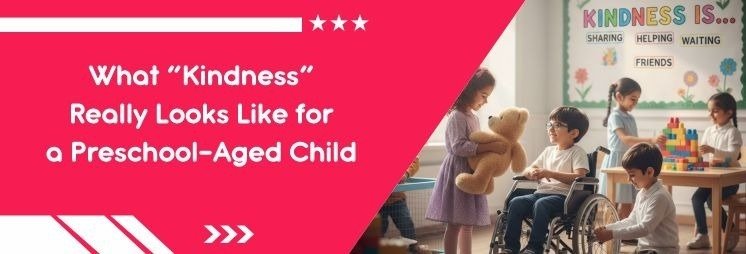
When we think about kindness in young children, we often imagine a child sharing a toy or quickly saying, “Sorry.” These are sweet moments, and yes, they matter. But if we pause and look closely, real kindness in pre-schoolers is much deeper than polite words and forced sharing. At age’s three to five, kindness is not about perfect manners. It is about developing age-appropriate empathy the ability to begin noticing, understanding, and responding to the feelings of others. And that kind of empathy does not appear overnight. It grows gently, through guidance, modelling, and everyday experiences. Kindness Is Developmental POne of the most important things parents and educators need to remember is this: pre-schoolers are still learning how the world works. They are: At this stage, children are naturally egocentric not selfish in a negative sense, but developmentally focused on their own needs and experiences. That is normal. So when a child grabs a toy or refuses to share, it does not mean they are unkind. It means they are still learning. True kindness in pre-schoolers often looks like small, quiet moments: These moments show emotional awareness beginning to bloom. Beyond “Share” and “Say Sorry” For years, adults have equated kindness with two simple instructions: “Share” and “Say sorry.” But let’s pause and reflect. When we force a child to share immediately, we may unintentionally dismiss their feelings. Imagine being deeply engaged in something you love and being told to hand it over instantly. That feels difficult even for adults. Instead of saying, “Share right now. That’s not kind,” we can guide with empathy: “I see you’re still playing with that. When you’re finished, your friend can have a turn.” This approach teaches: Similarly, a rushed “sorry” without understanding does not build real empathy. If a child bumps into a friend and we immediately demand an apology, they may repeat the word without understanding the impact of their actions. A more powerful response is: “Look at your friend’s face. How do you think they feel?” Now we are teaching emotional awareness, not just social compliance. What Age-Appropriate Empathy Really Looks Like Empathy in preschool is concrete and visible in everyday interactions. 1. Noticing Feelings When a child says, “She’s sad,” that is emotional growth. Recognizing emotions in others is a significant developmental milestone. We can support this by labelling feelings regularly: Over time, this builds emotional vocabulary the foundation of emotional intelligence in pre-schoolers. 2. Offering Comfort in Simple Ways Kindness at this age is often simple and spontaneous: These gestures may not be perfect, but they show connection. 3. Waiting (Even Briefly) Impulse control takes years to fully develop. So when a pre-schooler waits, even for a short moment that is meaningful progress. Patience is kindness in action. 4. Repairing After Conflict Conflict is common in early childhood. What matters is what happens after. Instead of shaming a child for pushing or shouting, we can guide them toward repair: “What can we do to help our friend feel better?” Repair teaches responsibility without fear. It builds compassion instead of compliance. Why Pre-schooler’s Sometimes Struggle With Kindness Many parents quietly worry: “Why is my child not being kind?” It is important to understand that pre-schoolers are still developing: Their brains are under construction. Challenging behaviour is not a personality flaw. It is a skill gap. And skill gaps can be taught. In high-quality preschool environments, teachers intentionally support social-emotional development alongside academics. Emotional growth is not separate from learning it is central to it. Children Learn Kindness by Watching Us WPerhaps the most powerful teacher of kindness is not a rule — it is modelling. Children observe how we: If we want children to speak gently, we must speak gently. If we want children to regulate emotions, we must show them how. One helpful strategy is thinking aloud: “I’m feeling upset, so I’m taking a deep breath.” “She looks tired today. Let’s give her space.” When children hear this language repeatedly, they begin to internalize it. Simple Ways to Nurture Kindness Daily Preschool friendships feel intense because they are one of a child’s first meaningful experiences of choosing Kindness grows through consistent small practices. Emotional Check-Ins Start the day with: “How are you feeling today?” This encourages self-awareness, the first step toward empathy. Role-Play Act out simple scenarios: Role-play allows children to practice responses safely. Notice and Describe Kind Acts Instead of labelling the child (“You’re so kind”), describe the behaviour: “I noticed you waited for your turn. That was thoughtful.” Specific praise reinforces understanding. Redefining Kindness in Early Childhood Kindness in pre-schoolers is not about perfection. It is not about constant sharing or flawless manners. It is about: It is messy. It is gradual. It is developmental. When we shift from demanding polite behaviour to nurturing authentic empathy, we raise children who do not just repeat the word “sorry” they begin to understand why it matters. And that understanding is the true beginning of kindness.
Why Preschool Friendships Feel Intense and How Parents Can Help

Preschool friendships can seem surprisingly deep, passionate, and dramatic even for adults. Many parents notice their child’s mood shift when a “best friend” changes activities or shows interest in another child. While it may seem like overreaction, this emotional intensity is a natural and important part of early social development. In this blog, we’ll explore why preschool friendships feel intense, the role of jealousy and emotional security in early friendships, and how you as a parent can nurture your child’s social confidence and emotional well-being. Why Are Preschool Friendships So Intense? Preschool friendships are unique because they represent one of the first opportunities children have for voluntary social connections outside the family. Unlike sibling relationships, these friendships are chosen and that choice feels powerful to a pre-schooler. Children at this age are beginning to: Early friendships feel intense because they are not just about play they are about learning how relationships work. When a pre-schooler’s attempt at friendship goes well, it boosts their sense of belonging and confidence. When it goes poorly, disappointment and confusion arise. This strong attachment is a normal part of cognitive and emotional development. Pre-schoolers are learning to understand others’ feelings, wants, and perspectives skills that will shape how they build relationships throughout life. The Role of Jealousy in Early Friendships Jealousy often gets a bad reputation but it actually plays an important role in social growth. Why Jealousy Happens Pre-schoolers don’t have fully developed reasoning skills. When a friend: …it can trigger feelings of exclusion and worry that they are not truly liked. At this stage, children are still learning that: This can lead to jealousy, even when there is no real threat to the friendship. Jealousy Helps Social Development Although uncomfortable, jealousy can help children learn: Instead of dismissing jealousy, parents can view it as an opportunity for social learning. Emotional Security and Early Friendships What Is Emotional Security? Emotional security is a child’s confidence that they are loved, accepted, and safe in their relationships both at home and with peers. Emotional security gives children the courage to: When a pre-schooler feels emotionally secure, they are more resilient and better able to form healthy friendships. How Friendships Affect Emotional Security In early childhood, friendships are a major source of emotional connection beyond home. Positive interactions help children feel: Even small successes in friendships like sharing a toy or playing a game together fuel emotional growth. Conversely, repeated negative experiences may lead to social anxiety or withdrawal. This is why parental support is essential during social development phases. How Parents Can Help Support Early Friendships Here are evidence-inspired, practical ways to help your child navigate early friendships, jealousy, and emotional security: 1. Validate Their Emotions Instead of minimizing feelings with statements like “Don’t be upset,” try: “It seems like you’re feeling hurt because your friend played with someone else. That must feel sad.” This tells your child their emotions matter a key ingredient in emotional security. 2. Use Playdates as Learning Opportunities Playdates are not just fun they are social practice. Parents can: This helps children build confidence in social situations. 3. Teach Friendship Skills Children don’t instinctively know how to: Parents can role-play and explicitly teach these skills. For example, practice sentences like: “Can I play with you?” “I feel sad when you take the toy.” This verbal practice builds a child’s social vocabulary and confidence. 4. Model Healthy Emotional Expression Children learn from what they see. When parents respond to emotions calmly and constructively, children learn to mirror this behaviour. Simple examples: This strengthens emotional intelligence a building block of strong friendships. 5. Balance Guidance with Freedom While parental support is important, children also need space to navigate social situations on their own. Allowing supervised independence helps them: A balanced approach fosters both emotional security and social autonomy. When to Seek Professional Support While intense friendships and jealousy are often normal, some signs suggest deeper challenges, including: If you notice these behaviours, consider connecting with a child specialist. 👉 Explore professional support at https://drsantoshisingh.com/contact-us/ Our team is here to help with child emotional and social development concerns. Conclusion: Early Friendships Are Powerfully Formative Preschool friendships feel intense because they are one of a child’s first meaningful experiences of choosing connection. Emotions like jealousy are not signs of failure they are part of learning how relationships work. With thoughtful parental support, children can grow in emotional security, empathy, and confidence. Parents can help by: Understanding early friendships, jealousy, and emotional security sets the foundation for lifelong social health.
Cold Days, Busy Minds: Keeping Your Pre-schooler Engaged Indoors

Easy Indoor Activities That Support Learning When the weather turns cold and outdoor play becomes limited, many parents and educators notice a familiar challenge: pre-schoolers with lots of energy and nowhere to release it. Shorter days, chilly mornings, and fewer outdoor opportunities can quickly lead to restlessness, boredom, and increased screen dependence. Yet, these quieter indoor seasons also offer a powerful opportunity. With the right approach, cold days can become a time for deep learning, creativity, and emotional growth. Pre-schoolers do not need elaborate setups or constant entertainment to stay engaged indoors. What they need are meaningful experiences that activate their curiosity, build independence, and support their rapidly developing brains. Simple indoor activities, when thoughtfully designed, can nurture language, motor skills, attention, and confidence all while keeping little minds busy and happy. Why Indoor Engagement Matters for Pre-schoolers Early childhood learning thrives on movement, exploration, and connection. When cold weather restricts outdoor play, children can miss out on sensory input and physical activity that regulate their emotions and attention. This is why indoor engagement is not about “keeping children busy,” but about supporting self-regulation, problem-solving, and joyful learning. Research consistently shows that young children learn best through play-based experiences that feel safe and predictable. Indoor environments, when calm and intentionally structured, can support focus and emotional security. This is especially important during winter months, when changes in routine can feel unsettling for little learners. (You may want to explore related insights in Why January Feels Hard for Little Learners for a deeper understanding of seasonal transitions.) Creating a Learning-Friendly Indoor Environment Before diving into activities, it helps to set the stage. A well-organized indoor space invites children to engage independently. Clear areas for reading, building, pretend play, and creative work help pre-schoolers understand expectations and feel more in control. Rotating toys instead of displaying everything at once reduces overwhelm and keeps interest fresh. Natural light, calm colors, and accessible materials encourage longer engagement. Even small changes like placing puzzles on a low shelf or setting up a cozy reading corner can make a big difference in how children interact with their space. Predictable indoor routines, similar to those discussed in Helping Pre-schoolers Ease into January Routines, further support emotional balance and cooperation. Language and Literacy through Everyday Indoor Play Cold days are perfect for strengthening language skills without formal lessons. Reading aloud remains one of the most powerful indoor learning tools. Choose stories with rhythm, repetition, and rich illustrations. Pause during reading to ask open-ended questions such as, “What do you think will happen next?” or “How does this character feel?” These moments support comprehension, emotional intelligence, and expressive language. Storytelling can also extend beyond books. Encourage your child to create stories using soft toys, dolls, or household objects. This kind of imaginative play strengthens narrative skills and builds confidence in communication. For parents looking to deepen connection through conversation, the ideas shared in The One Question to Ask Your Child after School offer valuable guidance. Building Thinking Skills with Simple Hands-On Activities Indoor play does not need expensive kits to be educational. Everyday household items can become powerful learning tools. Sorting buttons by color, stacking containers, or matching socks during laundry time all support early math and problem-solving skills. These activities naturally introduce concepts like classification, patterns, and sequencing. Construction play using blocks, recycled boxes, or magnetic tiles encourages spatial awareness and persistence. When children experiment with balance and design, they learn through trial and error an essential foundation for critical thinking. Allowing pre-schoolers to lead these activities reinforces independence and resilience, skills that are also highlighted in Tiny Resolutions That Actually Work for Pre-schoolers. Sensory Play to Support Focus and Regulation One of the biggest challenges during cold days is managing pent-up energy. Sensory play is a powerful way to help children regulate their bodies and emotions indoors. Activities like playing with dough, rice bins, or water transfers provide calming, repetitive movements that support concentration. Cooking together can also be a rich sensory experience. Measuring ingredients, stirring batter, and noticing textures and smells engage multiple senses while strengthening fine motor skills and early math concepts. These shared moment’s foster connection and confidence, reinforcing the idea that learning happens everywhere not just in classrooms. Movement Indoors: Keeping Little Bodies Active Even indoors, pre-schoolers need movement. Simple activities like dancing to music, following action songs, or creating obstacle paths using cushions and chairs help children release energy and improve coordination. These playful movements support gross motor development and reduce restlessness that can lead to behavioural struggles. Yoga for children, stretching routines, or animal movement games can be especially helpful on colder days. When movement is framed as fun rather than exercise, children naturally participate with enthusiasm. Consistent indoor movement routines also improve attention during quieter learning activities later in the day. Fostering Independence through Everyday Tasks Cold days provide more time at home, making them ideal for nurturing independence. Invite your pre-schooler to help with daily tasks such as setting the table, organizing toys, or watering indoor plants. These activities build responsibility, self-esteem, and practical life skills. When children are trusted with meaningful roles, they feel capable and valued. This sense of competence directly supports emotional development and confidence, themes often explored across early childhood guidance on drsantoshisingh.com. Small responsibilities today lay the foundation for confident learners tomorrow. Balancing Screens with Purposeful Play While screens may feel tempting during long indoor days, balance is key. Passive screen time often leads to shorter attention spans and increased irritability. Replacing excessive screen use with hands-on play, shared reading, or creative exploration supports healthier brain development. If screens are used, choosing high-quality, interactive content and watching together can turn screen time into a learning opportunity. The goal is not perfection, but intentionality prioritizing experiences that nurture curiosity and connection. Turning Cold Days into Meaningful Learning Moments Indoor days do not have to feel long or overwhelming. With thoughtful activities and a calm environment, they can become some of the most enriching moments in a pre-schooler’s day. Simple indoor experiences support learning, emotional security, and independence far more effectively than constant stimulation. By focusing on connection, play, and purposeful routines, parents and educators can transform cold days into opportunities for growth. When children feel engaged and capable indoors, their busy minds continue to thrive no matter the weather outside
Tiny Resolutions That Actually Work for Pre-schoolers
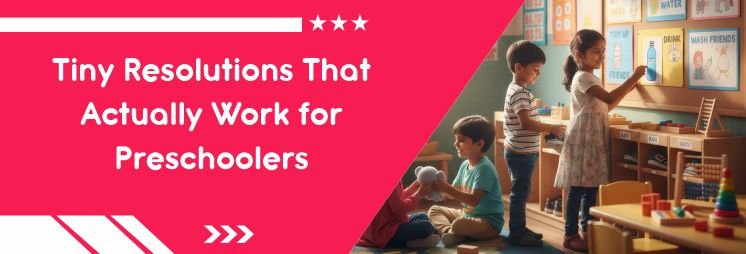
January often arrives with big intentions. Adults talk about goals, resolutions, and self-improvement, but for pre-schoolers, big promises rarely translate into real change. Young children don’t grow through grand plans; they grow through tiny, repeatable experiences that help them feel capable, safe, and trusted. That’s why tiny resolutions small, age-appropriate habits practiced consistently are far more powerful for pre-schoolers than any ambitious goal chart. These simple routines quietly build confidence, independence, and emotional security, laying the foundation for lifelong learning. At this early stage, success isn’t about doing more. It’s about doing small things well, every day. Why Big Resolutions Don’t Work for Little Children Pre-schoolers live in the present. Their brains are still developing self-regulation, impulse control, and executive functioning. Expecting them to “behave better,” “listen more,” or “be independent” without scaffolding sets them up for frustration. Instead of focusing on outcomes, children thrive when adults focus on process the predictable actions that slowly strengthen autonomy. Research and classroom experience consistently show that when routines are simple and emotionally supportive, children naturally become more confident and self-reliant. This philosophy is deeply aligned with the child-centered, developmentally informed approach shared throughout Dr. Santoshi Singh’s work with families and educators, where growth is seen as a journey, not a checklist (learn more about this philosophy on the About page). The Power of Tiny Habits A tiny resolution is not a rule. It’s an invitation. When a child learns to put away their shoes in the same place each day, they aren’t just tidying up. They are learning “I can take care of my things.” When they pour water with help and spill a little, they aren’t failing they are learning “I am trusted to try.” These small moments compound. Over time, they create a child who believes in their own capability. Habit One: “I Can Do One Thing by Myself” Independence begins with one manageable responsibility. Not an entire routine just one step. For some children, this might be washing hands before meals. For others, it could be choosing clothes for the next day or placing their plate in the sink after eating. The key is consistency, not perfection. When adults slow down enough to allow children to try, struggle briefly, and succeed with support, confidence naturally grows. This is a principle often emphasized in early childhood best practices, where independence is nurtured gradually rather than rushed (explored further in the Expertise section). Habit Two: Predictable Mornings That Build Security Morning routines shape a child’s emotional tone for the entire day. A rushed, unpredictable start can increase anxiety and reduce cooperation, while a calm, familiar rhythm builds emotional regulation. A tiny resolution might be as simple as following the same three steps every morning wake up, brush teeth, eat breakfast. Using visual cues or gentle verbal reminders helps pre-schoolers feel oriented and in control. Children who know what comes next feel safer. Safety is the soil where independence grows. Habit Three: Helping Without Pressure Pre-schoolers love to help but only when helping doesn’t feel like a test. Inviting children to carry napkins, water plants, or feed a pet gives them a sense of contribution. These acts communicate something powerful: “You belong here. You matter.” Over time, helpfulness transforms into responsibility. This kind of confidence doesn’t come from praise alone; it comes from being genuinely needed in small ways. Habit Four: Naming Feelings Before Fixing Behaviour Emotional independence begins with emotional awareness. When adults acknowledge feelings “You’re feeling frustrated,” or “That was disappointing” children learn that emotions are manageable, not overwhelming. This tiny habit reduces tantrums and builds self-regulation. A child who can recognize their emotions is better equipped to handle challenges independently. This approach aligns closely with the holistic, emotionally responsive framework discussed across articles on drsantoshisingh.com, where emotional well-being is seen as foundational to learning and behaviour (see more insights on the home page). Habit Five: Ending the Day with Reflection, Not Evaluation Instead of asking, “Were you good today?” try asking, “What did you enjoy today?” or “What was tricky?” This subtle shift moves children away from external judgment and toward self-reflection. They begin to see themselves as learners, not performers. A consistent bedtime reflection short and gentle helps children process their day and builds emotional resilience. Over time, they develop confidence in their ability to navigate experiences, both joyful and challenging. How Classrooms and Homes Can Support Tiny Resolutions Together Children benefit most when home and school environments reflect similar values. When educators and parents focus on independence through routines, not pressure, children feel supported rather than confused. Simple classroom practices child-accessible materials, clear routines, and respectful communication mirror what families can implement at home. This alignment strengthens a child’s sense of competence across environments. Small Steps, Big Impact Tiny resolutions work because they honour how pre-schoolers actually grow. They don’t demand sudden change; they allow development to unfold naturally. Confidence isn’t built in dramatic moments. It’s built quietly in the child who buttons their shirt with pride, who carries their own bag, who says, “I’ll try.” When we choose small, thoughtful habits over big expectations, we give pre-schoolers the greatest gift of all: belief in themselves.
Why January Feels Hard for Little Learners (and How Classrooms Can Help)
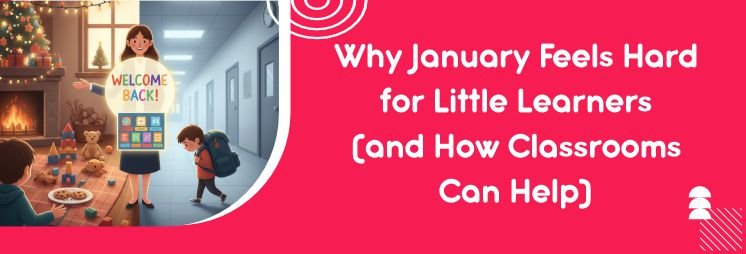
January often arrives with a sense of renewal for adults, but for young children, especially pre-schoolers and early learners, it can feel surprisingly overwhelming. After weeks of relaxed routines, festive excitement, late bedtimes, and constant stimulation, the sudden return to structured classroom expectations can challenge a child’s ability to regulate emotions, sustain attention, and feel secure. Understanding why January feels hard for little learners is the first step toward creating classrooms that gently support post-holiday adjustment rather than rushing children back into full academic mode. For young children, learning is deeply tied to emotional safety and predictable rhythms. During holidays, these rhythms shift dramatically. Mealtimes change, sleep schedules stretch, screen exposure increases, and familiar classroom cues disappear. When January begins, children are not simply “back to school”; they are recalibrating their nervous systems. This recalibration takes time, patience, and intentional classroom support. The Hidden Regulation Challenge after the Holidays Self-regulation is still developing in early childhood. Pre-schoolers rely heavily on external structures consistent routines, familiar adults, and predictable environments to help manage big feelings and impulses. During the holiday break, these external supports often become inconsistent. While the joy and bonding of the season are valuable, the sudden loss of structure can dysregulate young learners. When children return to school in January, this dysregulation may appear as increased clinginess, irritability, emotional outbursts, or withdrawal. These behaviours are not signs of defiance or lack of discipline; they are communication. The child’s body and brain are signalling that they need help settling back into balance. Classrooms that prioritize emotional regulation in January help children feel seen and safe. Simple practices such as slower morning transitions, familiar songs, and calm greeting rituals can act as anchors. Educators who understand child development, like those who focus on holistic early childhood well-being as discussed on the expertise page, recognize that emotional readiness must come before academic readiness. Why Attention Feels So Fragile in January Another common concern educators and parents notice in January is reduced attention span. Children who were once engaged may seem distracted, restless, or uninterested. This is not a regression; it is a normal response to overstimulation and fatigue. During holidays, children are exposed to constant novelty lights, gatherings, travel, noise, and screens. Their brains adapt to high levels of stimulation. When they return to a quieter, more structured classroom environment, sustaining attention feels harder. The brain needs time to relearn focus in low-stimulation settings. Classrooms can support attention recovery by lowering cognitive demands initially. January is not the time to introduce highly complex tasks or push long periods of seatwork. Instead, incorporating movement, sensory play, and hands-on exploration allows children to re-engage naturally. When learning feels embodied and playful, attention follows more easily. This approach aligns with developmentally appropriate practices often emphasized in reflective early education leadership, a philosophy rooted in understanding the child as a whole mind, body, and emotions as highlighted on the About page. The Emotional Weight of Transition and Separation January also reintroduces separation challenges. For some children, it feels like starting school all over again. Being away from caregivers after extended time together can trigger anxiety, even in children who previously separated with ease. Tears at drop-off, resistance to entering the classroom, or sudden regressions in independence are common. Rather than rushing goodbyes or dismissing these feelings, classrooms can normalize and validate them. When educators acknowledge emotions “It’s hard to be back after a long break” children feel understood. Emotional validation does not reinforce anxiety; it helps release it. Visual schedules, predictable daily rhythms, and consistent adult responses create a sense of safety. Children begin to trust that school is once again a place where they know what comes next. Over time, this trust restores confidence and emotional stability. How Predictable Routines Rebuild Security Routines are the silent curriculum of early childhood classrooms. In January, they are more important than ever. Predictable routines help children anticipate transitions, regulate behaviour, and feel in control of their environment. However, routines should return gently. Expecting children to immediately follow pre-holiday expectations can create unnecessary stress. Classrooms that revisit routines explicitly modelling, practicing, and reinforcing them with warmth support smoother adjustment. Morning circles that focus on connection rather than content, calm transitions between activities, and consistent end-of-day rituals help children settle emotionally. These practices reflect the understanding that learning readiness grows from emotional safety, a core theme across child-centered educational approaches featured on the homepage. The Role of Educators in January: From Instructors to Co-Regulators In January, educators often shift from being instructors to co-regulators. Young children borrow calm from the adults around them. A teacher’s tone, body language, and patience directly influence how children experience the classroom. When educators slow down, speak softly, and respond predictably, children’s nervous systems begin to mirror that calm. This co-regulation gradually transforms into self-regulation. January is not about pushing children forward; it is about bringing them back into balance. Classrooms that succeed in January understand that regulation, attention, and adjustment are interconnected. A regulated child can attend. A child who feels secure can engage. A child who feels understood can learn. Supporting January Transitions as a Community Successful January transitions are strongest when classrooms and families work together. When educators communicate openly with parents about what children may experience during this period, expectations become more compassionate and realistic. Sharing insights about sleep, routines, and emotional needs helps families align home and school environments. This partnership reinforces consistency, which is exactly what young learners need after the holidays. January, when approached thoughtfully, becomes an opportunity rather than a setback. It is a time to rebuild foundations, strengthen relationships, and reaffirm that learning is not a race it is a journey shaped by trust, patience, and understanding.
New Beginnings in the Classroom: Helping Pre-schoolers Ease into January Routines
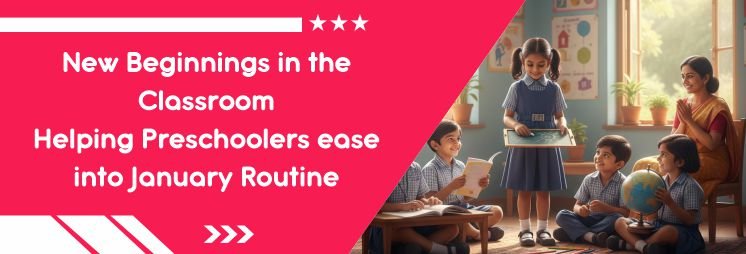
January brings a sense of renewal not just for adults, but for young children too. After weeks of holidays, late nights, family gatherings, and relaxed schedules, pre-schoolers often return to the classroom carrying mixed emotions. Excitement, resistance, clinginess, and fatigue can all show up at once. For early learners, January isn’t simply the start of a new calendar year it’s a major emotional and developmental transition. Supporting pre-schoolers as they ease back into January routines requires intention, empathy, and predictability. When classrooms prioritize emotional security and gentle structure, children regain confidence, regulate their emotions, and re-engage with learning more smoothly. Why January Transitions Feel Big for Pre-schoolers Preschool-aged children thrive on consistency. During holidays, routines often loosen bedtimes shift, screen time increases, and familiar classroom rhythms pause. While these changes are joyful, returning abruptly to structured days can feel overwhelming. Young children don’t yet have the cognitive tools to understand “it’s January now, so things are back to normal.” What they experience instead is separation from caregivers again, expectations to sit, listen, and follow rules, and less flexibility than they’ve grown used to. This is why emotional security must come before academic expectations in January. A child who feels safe, seen, and supported is far more ready to participate, learn, and reconnect socially. Predictable Routines as Emotional Anchors IOne of the most effective ways to support pre-schoolers during January transitions is through predictable, nurturing routines. Routines give children a sense of control in a world that often feels big and unpredictable. Simple rituals like a consistent morning welcome, familiar circle time songs, or a calming transition before lunch signal safety. These moments help children anticipate what comes next, reducing anxiety and emotional outbursts. Morning routines are especially powerful. A warm greeting, eye contact, and a familiar activity immediately upon arrival can help children separate from parents with greater ease. Over time, these rituals rebuild trust in the classroom environment. Educators and school leaders who intentionally design these rhythms are building the foundation for long-term emotional regulation an area deeply connected to healthy brain development and early learning readiness. Supporting Emotional Expression in January RJanuary is also an important time to normalize emotions. Some children may appear withdrawn, others overly active, and some may struggle with tears at drop-off. These behaviours are not misbehaviour they are communication. Classrooms that allow children to express emotions through play, conversation, and sensory activities help them process the transition more naturally. Storytelling, role-play, and picture books about feelings can gently open conversations about separation, change, and routines. Creating a calm corner or quiet space in the classroom also supports self-regulation. When children know there’s a safe place to pause and reset, they learn that emotions are manageable not something to fear or suppress. This emphasis on emotional well-being aligns closely with the holistic developmental philosophy shared on Dr. Santoshi Singh’s Expertise page, where early childhood development is viewed through the lens of emotional, cognitive, and social growth. The Role of Teachers as Emotional Guides Routines provide children with predictability and emotional security. When children know what comes next, In January, teachers often become emotional anchors. Children look to familiar adults to interpret whether a space is safe and predictable again. Calm voices, consistent responses, and patient redirection send powerful messages of security. Rather than introducing too many new rules or expectations immediately, effective educators revisit existing routines slowly. Re-modelling expectations through demonstration rather than correction helps children remember what to do without feeling pressured. Teachers who acknowledge feelings “You missed being at home; it’s okay to feel that way”—help children feel understood. This validation builds trust and strengthens the child-teacher relationship, which is essential for effective learning throughout the year. For school leaders and parents seeking deeper insights into nurturing classroom environments, the philosophy behind Dr. Santoshi Singh’s approach offers valuable perspective on emotionally responsive education. Partnering with Parents for Smoother Transitions January transitions are most successful when schools and families work together. When parents understand the importance of consistent sleep, mealtimes, and morning routines at home, children experience fewer disruptions emotionally and physically. Clear communication from schools sharing what the classroom day looks like and how routines are re-established helps parents reinforce similar rhythms at home. Even small consistencies, like waking up at the same time or talking positively about school, can make a meaningful difference. When parents and educators align, children feel a sense of continuity between home and school, reducing anxiety and increasing confidence. Routines as the Foundation for Learning While January may feel like a “reset,” it’s important to remember that routines are not about control they are about care. Predictable schedules free up mental energy, allowing children to focus on exploration, creativity, and social connection. Once emotional security is restored, children naturally re-engage with learning experiences. Activities that encourage collaboration, movement, and curiosity help ease them back into academic engagement without pressure. This balance between structure and flexibility is central to creating classrooms where children don’t just comply but thrive. Educators and parents exploring ways to support early learners holistically can find ongoing guidance and resources on DrSantoshiSingh.com, where child development is approached with both scientific insight and compassionate understanding. A Gentle Start Sets the Tone for the Year As we prepare calendars and resolutions, let’s remember: January doesn’t need to be rushed. When preschool classrooms honour the emotional needs of children and prioritize predictable routines, the transition becomes smoother for everyone involved. New beginnings in the classroom are not about immediate productivity they are about rebuilding trust, restoring rhythm, and reminding children that school is a safe, welcoming place. With patience, consistency, and empathy, January can become a powerful foundation for confident, joyful learning all year long.
Building Good Habits Before the New Year: Life Skills for Pre-schoolers
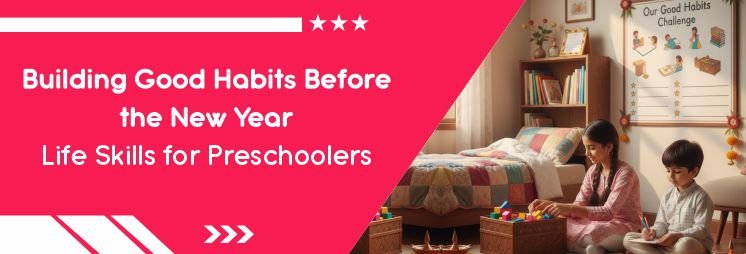
Teaching Independence, Responsibility, and Simple Daily Routines That Last a Lifetime As the year comes to a close, many adults begin reflecting on goals, habits, and fresh starts. But what if the most powerful New Year preparation isn’t for us but for our children? For pre-schoolers, the weeks before the New Year present a beautiful opportunity to build life skills that go far beyond academics. Simple habits like putting toys away, washing hands independently, or choosing clothes become the foundation for confidence, self-regulation, and responsibility. In quality early learning environments, we know one truth well: strong habits built early shape capable, resilient learners for life. Why Habits Matter More Than Academic Skills in the Preschool Years Pre-schoolers are in a critical stage of brain development where routines wire the brain for order, predictability, and emotional safety. Before children can manage worksheets or structured learning, they must first learn to manage themselves. Good habits help children: As emphasized in developmentally aligned preschool philosophies shared by experts like Dr. Santoshi Singh, early childhood is not about rushing outcomes it’s about building the right foundations. (Learn more about her approach to early learning on the Expertise page.) Habit 1: Teaching Independence Through Everyday Choices Independence doesn’t mean doing everything alone it means being trusted with age-appropriate responsibility. Simple ways to nurture independence: These small moments communicate a powerful message: “I trust you.” In preschool classrooms, independence is taught intentionally not by pressure, but through structured freedom. Children who experience independence early show greater problem-solving skills and emotional resilience later. Habit 2: Responsibility Begins with Caring for Belongings Responsibility is not taught through lectures it is learned through consistent action and modeling. Age-appropriate responsibilities for pre-schoolers: Instead of saying, “Be responsible,” we show children what responsibility looks like through daily routines. At home and in preschool environments guided by child development principles, children learn that their actions matter. This sense of accountability becomes the backbone of ethical behaviour later in life. Habit 3: The Power of Simple Daily Routines Routines provide children with predictability and emotional security. When children know what comes next, anxiety reduces and cooperation increases. Essential routines to build before the New Year: Well-designed routines support executive function skills—attention, memory, and self-control. As discussed on the About Dr. Santoshi Singh page, intentional routines are a hallmark of high-quality early childhood environments. Habit 4: Emotional Responsibility Naming Feelings and Needs Life skills are incomplete without emotional awareness. Pre-schoolers must be taught: Instead of punishing emotional outbursts, educators and parents can guide children toward self-regulation strategies such as deep breathing, quiet corners, or calm verbal expression. When children learn emotional responsibility early, they grow into adults who communicate rather than react. Habit 5: Consistency Over Perfection One of the biggest mistakes adults make is expecting habits to form instantly. Children learn through repetition, patience, and gentle reminders. Tips for habit-building success: In both home and preschool settings, consistency matters far more than strict discipline. Preparing Children for a Confident New Year As we prepare calendars and resolutions, let’s remember: Pre-schoolers don’t need big goals they need strong roots. By focusing on: …we prepare children not just for the New Year, but for life. If you’re a parent, educator, or school leader seeking deeper insight into child-centered learning environments, explore more resources and reflections at https://drsantoshisingh.com a space dedicated to nurturing confident children and conscious educators.
The Gift of Learning: 10 Experiences Children Need More Than Toys This December
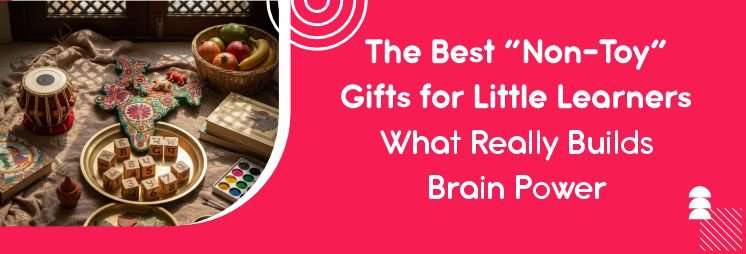
In a world overflowing with flashing lights, battery-operated toys, and endless online shopping lists, many parents find themselves asking an important question: What actually helps my child grow, learn, and thrive? The answer might surprise you. Research in early childhood development consistently shows that children don’t need more toys they need more experiences. The most powerful gifts for little learners are often invisible: moments of connection, opportunities for exploration, and experiences that spark imagination and emotional security. If you’re looking for meaningful, brain-boosting gift ideas that go beyond plastic and packaging, this guide will help you choose non-toy gifts that truly build brain power. Why Experience-Based Gifts Matter More Than Toys During the first few years of life, a child’s brain grows at an extraordinary pace. Neural connections are shaped by interaction, movement, language, and emotional safety, not by how many toys sit on a shelf. According to research-driven learning practices highlighted through professional work in early childhood education and child psychology at https://drsantoshisingh.com/expertise/, children learn best when experiences engage the whole child mind, body, and heart. Experience-based gifts: These are gifts that grow with the child, long after the excitement of a new toy fades. 1. Time: The Most Powerful Non-Toy Gift One of the most impactful gifts you can offer a young child costs nothing: your undivided time. Shared experiences such as: These moments build secure attachment, which neuroscience identifies as the foundation for attention, memory, and learning. This child-first approach reflects Dr. Santoshi Singh’s philosophy on early learning, where emotional connection is seen as the gateway to cognitive growth (learn more about Dr. Santoshi Singh). 2. Books as Shared Experiences, Not Just Gifts Books become powerful when they are experienced together. Instead of gifting stacks of books, consider gifting: Reading together strengthens language pathways, imagination, empathy, and listening skills. More importantly, it sends a powerful message: “You are worth my time.” Across expert guidance on child development available on https://drsantoshisingh.com/, literacy is consistently framed as a relationship-driven experience, not an academic race. 3. Open-Ended Experiences That Build Thinking Skills Children develop higher-order thinking when play has no fixed outcome. Experience-based, non-toy gifts include: Such experiences develop problem-solving skills, creativity, and executive functioning. They allow children to test ideas, make mistakes, and build resilience. This approach aligns closely with holistic child development expertise shared through https://drsantoshisingh.com/expertise/, where play is recognized as the primary language of childhood. 4. Creative Experiences That Spark Imagination Children flourish when they have the freedom to move, explore, make choices, and experiment. This December, Creativity is not about producing perfect artwork it’s about expression, process, and freedom. Meaningful creative experiences include: These experiences strengthen emotional expression, confidence, and flexible thinking. Children learn to communicate ideas, feelings, and perspectives skills that matter far beyond childhood. As emphasized in child-centered learning approaches across https://drsantoshisingh.com/, creativity is not an “extra” it is essential brain work. 5. Emotional Learning as a Gift for Life Social and emotional development plays a crucial role in long-term success. Experience-based emotional gifts include: Children who understand their emotions early show better self-control, stronger relationships, and improved academic outcomes later. This belief is deeply connected to professional insights into child psychology found within Dr. Santoshi Singh’s work and expertise. 6. Life Skills: Gifts That Build Confidence Children love feeling capable and trusted. Real-life experiences such as: These experiences build confidence, independence, and executive functioning skills key indicators of future readiness. Encouraging responsibility is a recurring theme in parenting and educator guidance across https://drsantoshisingh.com/. 7. Memory-Making Experiences Over Material Gifts Years from now, children won’t remember most toys but they will remember: Consider gifting: These experiences leave lasting emotional and neurological imprints. Final Thought The best non-toy gifts for little learners are not about buying more they are about being more present. When you choose experience-based gifts, you nurture imagination, strengthen emotional bonds, and build the brain foundations that support lifelong learning. To explore more child-first, research-backed insights on parenting and early education, visit https://drsantoshisingh.com/ and discover how meaningful experiences shape confident, curious learners.
December Magic in the Classroom: Turning Everyday Moments into Learning Adventures

December has a special kind of magic not just in the twinkling lights and festive excitement, but in the way children naturally slow down, observe more deeply, and connect emotionally with the world around them. In early childhood classrooms, this is the month when simple moments become powerful opportunities for learning. A dropped mitten, a cold breeze through the window, a classroom decoration, or children whispering about celebrations at home everything becomes a rich doorway to curiosity. As an early childhood educator or school leader, your greatest tool is not always a perfectly planned activity. It is your ability to transform everyday interactions into meaningful, teachable moments. December offers these moments generously, and when we recognize them, they turn into learning adventures that stay with children long after the season ends. At Dr. Santoshi Singh Early Childhood Insights, we believe that great teaching is not about more worksheets or holiday-themed crafts it’s about using authentic experiences to nurture language, thinking, empathy, and independence. The Magic of Noticing: When Small Moments Become Big Lessons Children are naturally observant in December. They notice tiny changes the chilly air, the holiday colors, the warm clothes, the different foods at home. When teachers respond with curiosity instead of rushing the schedule, everyday interactions turn into rich learning. For example: A child points to frost on the window. Instead of saying, “Yes, that’s ice, sit down now,” a teacher might ask: “What do you think makes the window look white today?” This one question builds: Such interactions don’t need preparation. They need presence. wth. December Conversations Build Emotional Intelligence This month carries emotional weight for young children excitement, confusion about celebrations, changes in home routines, and even overstimulation. A child saying, “I feel funny today,” while looking at the Christmas stars is not just expressing mood they are giving a window into emotional development. A teacher can use that as a learning moment by gently labeling feelings, connecting with stories, or creating a reflective circle time. These small conversations support: These are abilities that Dr. Santoshi Singh often highlights in her child development frameworks, especially when guiding educators on holistic, child-centered practices. Seasonal Play as a Gateway to Discovery Simple materials in the classroom gain new meaning in December. Think about: During sensory play with these materials, teachers can naturally introduce math, language, and science. A cotton-snow tray becomes: No worksheets needed. Just intentional facilitation. e. Celebration Stories: Cultural Learning Through Children’s Eyes December is rich with cultural diversity Christmas, local festivals, winter traditions, school events, and family rituals. When children share stories from home, they are not just talking. They are offering educators a chance to expand social learning. A teacher might say: “Riya brings sweets at home during this festival. Does anyone else have a special winter food?” This moment becomes: Such conversations also offer beautiful opportunities to link to other blog topics on your website, such as play-way learning, parent-child connection, and developmentally appropriate practices. Nature Walks: December’s Outdoor Classroom Stepping out into the mild winter air can turn even a 10-minute walk into a rich learning experience. Children may notice: When teachers respond with open-ended questions like “What do you think the birds are searching for today?” children begin developing: This aligns with many experiential learning approaches discussed across Dr. Santoshi Singh’s educational philosophy. s. Routine Transitions Become Skill-Building Moments December often brings disruptions events, holidays, theme days. Teachers can use routine transitions as micro-learning opportunities. During arrival time: Children can place their winterwear neatly and talk about the weather, building independence and awareness. During cleanup: An accidental spill becomes a problem-solving moment: “What can we use to clean this up? How can we do it together?” During snack time: Seasonal fruits or warm foods can spark nutrition conversations or counting activities. In a well-designed early childhood environment, even packing their bags becomes a lesson in sequencing and executive function. The Power of Storytelling in December Children love stories even more this month because emotions are heightened and the environment feels magical. Teachers can choose winter-themed books or stories from different cultures, but the true learning comes from the interactions after the story. Ask questions like: These discussions build comprehension, empathy, reasoning, and narrative skills—key developmental milestones in early childhood. Why December Matters in Early Education December is not just a festive month it is a rich educational opportunity where teachers can harness natural curiosity, sensory stimuli, social energy, and emotional depth. By turning ordinary classroom moments into meaningful learning adventures, educators help children: This is precisely the kind of child-centered, developmentally appropriate practice that Dr. Santoshi Singh promotes in her training sessions, workshops, and educator resources found throughout drsantoshisingh.com.
Raising Curious Thinkers Why Questions Matter More Than Answers
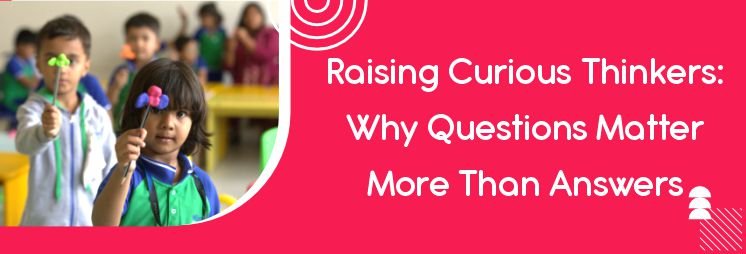
Curiosity is the spark that ignites learning. Long before children learn to read, write, or solve equations, they begin their learning journey by asking questions. “Why is the sky blue?”, “What makes the rainbow?”, “How does the fan move?” these seemingly simple questions reflect a powerful truth: children learn best when they are curious. In early childhood education, the goal is not to give children all the answers. Instead, it is to nurture curious thinkers who explore, investigate, experiment, and reason. This is where inquiry-based learning becomes a game-changer. It encourages children to question the world around them and empowers them to become independent, confident, and critical thinkers. As an early childhood expert with over 18 years of experience, Dr. Santoshi Singh emphasizes that questions matter more than answers. They help children build the foundation for meaningful learning and future academic success. Why Inquiry-Based Learning Matters Inquiry-based learning shifts the focus from teaching facts to guiding children through a process of exploration. Instead of telling children what to think, educators guide them to discover how to think. Here’s why this approach is so impactful: 1. It Fuels Natural Curiosity Children are naturally curious explorers. Inquiry-based learning taps into that instinct. Instead of restricting learning to books and worksheets, it encourages children to: By giving children the freedom to wonder and explore, we strengthen their cognitive and emotional growth. 2. It Builds Critical Thinking from an Early Age Critical thinking is not a skill reserved for older children. Pre-schoolers can analyse, compare, predict, and reason when given the chance. For example, when a child asks, “Why do leaves fall?” an inquiry-based approach doesn’t give the exact answer immediately. Instead, the teacher guides them to: This process develops essential skills such as reasoning, analysis, and problem-solving skills that will support them through school and life. 3. It Promotes Independence and Ownership Children learn best when they feel ownership of their learning journey. Inquiry-based learning provides that ownership through: Children become confident, motivated learners who take initiative rather than waiting for instructions. 4. It Supports Holistic Development Inquiry is not just a cognitive skill it nurtures: As children ask questions, share ideas, and build hypotheses, they learn to express themselves clearly and respectfully. How Curiosity Shapes Lifelong Learners IfCuriosity is the foundation upon which lifelong learning is built. Children who question deeply grow into adults who question wisely. Here’s what curiosity nurtures: ✔ A love for learning Children stay motivated because learning feels exciting, not like a chore. ✔ Better problem-solving skills Curious children become adults who think innovatively and approach problems from fresh angles. ✔ Emotional strength Curiosity reduces fear of the unknown and increases resilience. ✔ Academic excellence When children understand concepts deeply, they retain them longer and apply them better. The Role of Educators and Parents in Fostering Curiosity Both teachers and parents play a critical role in encouraging inquiry-based learning. Here’s how: 1. Welcome Every Question No question is too small or too silly. Children must feel safe to ask anything. 2. Answer with Another Question Instead of telling them the answer, guide them: “What do you think will happen if…?” This encourages deeper thinking. 3. Create Spaces for Exploration At home or school, simple setups nature corners, tinker tables, sensory trays—can stimulate curiosity. 4. Encourage Hands-On Learning Allow children to: 5. Celebrate Effort, Not Just Correct Answers Praise curiosity, attempts, and discoveries. This builds confidence and reduces the fear of failure. Inquiry-Based Learning in Dr. Santoshi Singh’s Educational Approach As a leading edupreneur and early childhood specialist, Dr. Santoshi Singh strongly advocates for inquiry-based learning as a foundation for modern early education. Her educational philosophy emphasizes: Through her preschools and training programs, she empowers educators to move beyond conventional methods and embrace innovative, child-focused learning models. Readers can learn more about Dr. Singh’s thought leadership in early childhood education by exploring her articles on curriculum design, experiential learning, parent engagement, and teacher empowerment on the blog section of drsantoshisingh.com. Why Questions Matter More Than Answers When children ask questions, they are not seeking information—they are building bridges between ideas. They want to understand the world, its patterns, its mysteries, and its possibilities. When adults respond with curiosity instead of quick answers, we teach children to: And that is the true purpose of education not to fill children with facts, but to inspire them to discover knowledge for themselves. Conclusion: Let Curiosity Lead the Way Raising curious thinkers is one of the greatest gifts we can offer the next generation. By embracing inquiry-based learning, we allow children to grow as imaginative explorers, independent thinkers, and confident learners. When children learn through curiosity, they don’t just memorize facts they build understanding. They don’t just follow instructions they innovate. They don’t simply learn they love learning. And that is where true education begins.
Every Child is a Wonder: Celebrating the Joy of Learning this Children’s Day

Children’s Day is a special moment each year when we pause, reflect, and celebrate the enormous potential and wonder that every child carries within. In India, we observe Children’s Day on 14 November the birth-anniversary of Jawaharlal Nehru, fondly called “Chacha Nehru”. He believed that children are the future of our nation, and worthy of not just care, but an environment full of joy, curiosity and learning. As parents, educators or simply caring adults in a child’s world, this day invites us to step back from the usual routine and ask: How are we nurturing the natural curiosity, imagination and play-spirit that every child brings? How are we celebrating not just what children learn, but how they learn? 1. Curiosity: The Spark of Learning Curiosity is the engine of learning. When a child asks “why?”, “how?”, or “what if?”, they are engaging in one of the most powerful acts of human growth: exploration. On Children’s Day, let’s recognise that every child is a wonder because they are born with this spark. Research shows that when children are allowed to pursue their questions, explore materials, test ideas and make mistakes, they develop not just subject-knowledge but deeper capacities: initiative, independence, problem-solving, and a love of learning. How to celebrate curiosity this day: By doing so, we send the message: you are a wonder, your questions matter, your exploration matters. That is empowering and sets the foundation for lifelong learning. 2. Imagination: The Playground of Possibility If curiosity asks “what if?”, imagination says “what could be?” Together they unlock worlds. A child with a vivid imagination is not merely pretending they are rehearsing new possibilities, testing identities, creating new mental maps of the world. Play and imagination go hand-in-hand: imaginative play invites children to step into new roles, stories, contexts, and thereby build flexible minds, empathy, creativity and resilience. The kind of learning that emerges from imagination is rich: they create meaning, link ideas, explore feelings, and picture futures. As we celebrate Children’s Day, we can nurture imagination: When imagination is supported, children internalise that they can envision, they can design, they can dream. They become active makers of meaning, not just passive receivers. 3. Play-Based Learning: Where Curiosity Meets Imagination Here is where the three threads curiosity, imagination, play come together in fertile harmony. The pedagogy of playbased learning recognises that children learn best when they are actively doing, exploring, creating, imagining and playing. Research has shown many benefits of play-based learning: it promotes cognitive development, social-emotional skills, language and literacy, problem‐solving, creativity and more. It also supports deeper engagement: children stay motivated, they own their learning, and they feel joy in the process. For example, when children build with blocks, they test geometry, balance, symmetry; when they role-play a market, they negotiate, plan, communicate; when they experiment with water and sand, they test cause and effect, predict, reflect. These are experiences where learning emerges naturally, within play. On Children’s Day, we can make a conscious effort to honour play-based learning: In doing so, we shift the narrative from learning = drills, to learning = exploration, creation, joy. That shift acknowledges the wonder in every child. 4. Why This Matters and Why Today Children’s Day symbolises more than celebration it reminds society of the rights, potential and responsibilities we have towards children. The day is partly about fun and play, but also about recognising that every child deserves a nurturing environment where curiosity, imagination and play are honoured. When we invest in such an environment, we invest not just in individual children but in our collective future. Children who feel free to explore, imagine, and play become adults who think flexibly, innovate boldly, collaborate kindly, and embrace lifelong learning. And so, this Children’s Day, the invitation is simple yet profound: Celebrate the wonder of the child you are with or around. Let us create moments where questions are welcomed, imagination is unleashed, and play is honoured. 5. Practical Ideas You Can Try Today Here are some ready-to-use ideas to turn the ethos into action: 6. A Message for Families, Educators and All Adults To parents: remember that your attitude matters. When you show wonder, ask questions alongside your child, engage in their play, stand back when needed, and cheer their explorations you signal that curiosity, imagination and play are valuable. To educators: integrate play-based approaches whenever possible. Even small changes—more open-ended tasks, more room for imagination, more student-led exploration—can shift the culture of learning toward wonder. The research is clear. To community: Celebrate children not just as future achievers but as present wonders. Value their questions, full stop. Encourage communities where play spaces exist, safe environments exist for exploration, and where we honour the fun and the learning of childhood. 7. Conclusion On this Children’s Day, let us remind ourselves that every child is a wonder. Not because they will become something someday, but because they are something now a curious explorer, an imaginative creator, a playful learner. And when we celebrate that truth, we unlock potentials, build joy, and nurture futures. Let us make it our mission not only to teach children facts, but to nurture their curiosity; not only to develop skills, but to fuel imagination; not only to prepare them for tests, but to give them space for play. Because when learning is joyful, meaningful and rooted in play, children thrive. Here’s to a Children’s Day filled with wonder, laughter, discovery and play. And here’s to every child: may your curiosity stay alive, your imagination soar, and your play remain sacred.
From Dream to Impact: My Edupreneurial Journey in Early Childhood Care

(A leadership story by Dr. Santoshi Singh) When I first ventured into early childhood education more than 18 years ago, I had a simple dream: to create a learning space where young children feel seen, safe, and valued — beyond worksheets or rote routines. Over time, that dream grew. It evolved from one preschool classroom into a thriving brand and then into a mission: mentoring educators nationwide. This is the story of how I, Dr. Santoshi Singh, moved from dream to impact in the field of early childhood care and education (ECCE). The Early Spark: Why Early Childhood Care Mattered From my days as a teacher and curriculum developer, I saw how profoundly the early years shape a child’s future. The brain is rapidly developing; the social-emotional foundations are laid; learning attitudes are formed. I believed then as I do now that high-quality early childhood care is not a luxury, but a necessity. The first leap I made was founding a preschool brand rooted in respectful pedagogy, play-based learning and mindful teacher-child relationships. This was not simply “setting up a school” it was about embedding values, designing environments, and empowering educators to become facilitators of growth rather than mere instructors. Founding the Preschool Brand: Vision Meets Execution With clarity of purpose, I launched my first centre under the brand that would grow into a multi-location preschool network. We built classrooms that were bright, safe, and inviting with age-appropriate zones for play, exploration and social interaction. Our curriculum combined child-led activity, meaningful scaffolding and opportunities for emotional-wellbeing. But vision alone wasn’t enough. Leadership meant rolling up my sleeves and addressing operational realities: recruiting the right educators, designing training modules, establishing systems for assessment and feedback, and ensuring parent partnership. Every week for the first two years, I visited classrooms, held reflective sessions with teachers, observed learning moments, and iterated the design. Leadership in these early years taught me that “brand building” in early childhood care is less about glitzy marketing and more about consistency, authenticity and relationships. When children thrive, when teachers feel empowered and supported the brand voice emerges organically. Scaling Up: From One Centre to a National Vision Once the first two centres were stable and thriving, I realised we had a replicable, high-quality model one that could serve more children, engage more educators and influence the sector. That’s when I shifted from “founder of a preschool” to “edupreneur and mentor of early childhood education”. Scaling meant new challenges: standardising quality without stifling individuality; training educators across locations; maintaining culture when centres multiplied; ensuring each child’s experience felt personal, even in a network. It meant building systems teacher-training modules, leadership pipelines, mentorship frameworks, community of practice and then stepping into the role of leader-mentor. In this phase, I began to travel, speak at conferences, design workshops for educators, and partner with institutions across India. My mission: not just to run schools, but to mentor educators to run schools well, to raise the bar of early childhood care, and to create a ripple effect far beyond my own classrooms. Mentoring Educators Nationwide: Impact Beyond My Own Brand Today, mentoring has become the heart of my leadership story. I conduct workshops for early childhood teachers, school leaders and aspiring edupreneurs. I guide educators in adopting play-based, brain-aware, emotionally-rich pedagogies. I support school owners in designing nurturing environments, building empowered teams and evolving their culture. One of the most fulfilling aspects: seeing teachers I trained become leaders themselves, launching their own learning centres, influencing children and communities. The brand I once founded remains a hub, but the influence now spreads across networks, cities and states. My story has become less about the preschool I started and more about the educators I empower. Leadership Lessons Learned: Tips for Aspiring Edupreneurs From my journey, here are five leadership lessons I’ve learned and now share with the educators and entrepreneurs I mentor: From Dream to Impact: What’s Next? What began as a single preschool has grown into a movement of mentors and educators. Going forward, I’m focusing on enabling networks of early childhood centres, creating mentor-led community platforms, and bridging research-practice gaps in early childhood care. I’m excited about collaborating with partners, training more educators, influencing policy and continuing the journey of impact. I invite you whether you’re a teacher, a centre-owner, a parent or simply someone passionate about early childhood care to join this mission. Together, we can transform more childhoods, strengthen communities and build a future where every young learner thrives. Conclusion My journey from the dream of an inviting preschool classroom, to founding a brand, to mentoring an entire network of educators has taught me that real impact takes time, heart and purpose. Leadership in early childhood care is not just about running centres: it’s about nurturing people, building culture and enabling others to lead. I hope that by sharing my story, I inspire educators and edupreneurs to dream boldly, lead thoughtfully and impact deeply. If you’re ready to join this journey, explore the resources, connect with me, and let’s make a difference together.
The Power of Storytelling in the Classroom: Building Empathy & Imagination
Storytelling is one of humanity’s oldest teaching tools a timeless art that connects people across generations. In today’s classrooms, particularly in early childhood education, stories serve a much deeper purpose than entertainment. They are powerful instruments for language development, emotional intelligence, and moral growth. According to Dr. Santoshi Singh, an early childhood specialist and edu-entrepreneur, “Stories are the bridge between the child’s inner world and the world around them.” When woven thoughtfully into classroom practices, storytelling becomes a bridge between learning and life. 1. Storytelling as the Foundation for Language Development SlChildren learn language best when it’s meaningful and engaging. Storytelling naturally introduces new vocabulary, sentence patterns, and expressive tone, making language learning intuitive and enjoyable. When teachers tell stories aloud, children listen not only to words but also to rhythm, pitch, and emotion. These auditory cues strengthen listening and comprehension skills, helping them understand the nuances of communication. Interactive storytelling such as asking children to repeat lines, predict what happens next, or dramatize scenes fosters active participation. It enhances both verbal fluency and creative thinking. Pro Tip: Incorporate short story sessions daily. Use picture books, puppetry, or role-play to encourage children to retell stories in their own words. This builds language confidence and supports literacy readiness. 2. Nurturing Emotional Growth and Empathy While sleep restores the body, rest rejuvenates the mind. It doesn’t mean doing nothing — it’s about giving the bChildren often feel big emotions but lack the vocabulary to express them. Storytelling helps them name and understand those feelings through relatable characters and experiences. When a child listens to a story about courage, kindness, or loss, they begin to empathize with the characters and reflect on their own emotions. Teachers can encourage this by asking reflective questions such as, “How do you think the character felt?” or “What would you do if you were in their place?” This guided reflection builds emotional literacy the ability to recognise and manage one’s own feelings and relate to others with compassion. Research shows that when classrooms adopt social-emotional learning practices, students are better able to articulate emotions and engage positively in learning. In Dr. Santoshi Singh’s framework, this overlaps closely with mindfulness and awareness in education. You might want to explore how mindfulness supports student focus and emotional regulation in the post “Mindfulness in Education: Student Focus”. 3. Teaching Values and Character Through Stories Stories have always been a medium for teaching right from wrong. Through storytelling, children learn values organically by observing the actions and consequences of characters they admire or question. Whether it’s the moral of The Honest Woodcutter or the kindness in The Lion and the Mouse, these tales shape moral understanding in ways lectures cannot. In classrooms inspired by Dr. Santoshi Singh’s philosophy, storytelling is often integrated with value-based learning. Teachers select stories that reflect virtues such as gratitude, teamwork, honesty and empathy qualities that form the foundation of good citizenship. Tip for Educators: Encourage children to share stories from their families or cultures. This not only builds a sense of identity but promotes respect for diversity and inclusion. Also, you may refer to her article “Emotionally Smart Classrooms – Tips” to see how emotional intelligence and values go hand-in-hand in early year’s settings. 4. Building Imagination and Creativity Storytelling is a gateway to imagination. It allows children to travel to distant worlds, meet magical creatures or explore everyday adventures through a new lens. This creative exposure is vital because imagination fuels curiosity, innovation and problem-solving. When children visualise the scenes from a story, they engage in abstract thinking. They begin to ask “What if?” questions, explore different possibilities and invent their own versions. These skills are the foundation for creative thinking, innovation and cognitive flexibility. Encouraging children to create their own stories, draw storyboards, or act out scenes nurtures innovation and self-expression. It helps them see the world not just as it is, but as it could be. Activity Idea: Try the “Story Seed” exercise give children a simple sentence or image (like “a butterfly who wanted to visit the moon”) and let them build their own story. You’ll be amazed at what unfolds! 5. The Science Behind Storytelling: How It Shapes the Brain Modern neuroscience supports what educators have intuitively known for centuries: stories activate multiple areas of the brain simultaneously. When a child listens to a story, their brain lights up in regions responsible for language, emotions and sensory experiences. This means children don’t just hear stories they feel them. The narrative structure helps them process information more deeply and retain it longer. Storytelling also helps develop neural pathways linked to empathy and perspective-taking. In essence, stories shape not just what children know, but who they become. In the context of early childhood education, Dr. Santoshi Singh emphasises that storytelling should be viewed not as a separate subject but an integrated learning experience one that blends language, values and emotional intelligence. 6. Creating a Storytelling Culture in Schools To unlock storytelling’s full potential, schools must embed it in their learning culture. This means creating dedicated “story corners”, organising story-days, and encouraging peer-storytelling sessions. Teachers can adopt diverse formats oral storytelling, digital media, or even animation—to cater to different learning styles. Including folk and multicultural stories enriches children’s world-views and instills appreciation for global diversity. Tip for Schools: Collaborate with parents by sharing weekly story themes. Encourage families to discuss these stories at home, which strengthens home-school connections and keeps learning alive beyond the classroom. 7. Storytelling: A Lifelong Skill for the Future The benefits of storytelling extend well beyond childhood. Children who grow up immersed in stories often become adults who listen empathetically, communicate effectively and think creatively. In Dr. Santoshi Singh’s educational approach, storytelling is not an isolated activity—it’s a holistic practice that nurtures language, emotion and moral intelligence. It transforms classrooms into spaces where learning feels alive and purposeful. As she often says, “When we tell stories, we don’t just teach lessons; we nurture hearts and minds.” By embracing storytelling,
Sleep, Rest & Play: The Trio Every Parent Should Prioritize
Explaining the Science of Balance for Child Development Every parent dreams of raising a happy, healthy, and confident child. We focus on education, nutrition, and activities yet one of the most powerful foundations of child development lies in three simple elements: sleep, rest, and play. When balanced well, these three pillars create harmony in a child’s body and mind. Sleep restores energy, rest calms the brain, and play fuels imagination and learning. Let’s explore how science shows that this trio is the secret to raising balanced, emotionally strong, and joyful children. 1. Sleep: The Foundation of Growth Sleep is more than just “downtime.” During deep sleep, a child’s body releases growth hormones, strengthens immunity, and organizes memories from the day. Quality sleep directly affects learning, focus, emotional control, and even behaviour. According to experts, children who get enough sleep show better concentration and mood regulation, while sleep-deprived kids are often irritable and struggle academically. Here’s how much sleep children typically need: To build healthy habits, create a calm bedtime routine — dim the lights, read a story, and keep screens away before bed. Small changes like these support long-term well-being. 👉 Learn more about healthy sleep habits for kids on our Student Well-being page. 2. Rest: The Pause Kids Need While sleep restores the body, rest rejuvenates the mind. It doesn’t mean doing nothing — it’s about giving the brain moments of quiet reflection. Rest can be as simple as reading a book, sitting quietly, drawing, or even daydreaming. In today’s fast-paced routines filled with schoolwork and screen time, children rarely experience true stillness. But neuroscientists confirm that moments of rest strengthen creativity, improve focus, and reduce stress. Parents can encourage rest by: These pauses help kids manage emotions, recharge mentally, and feel calmer throughout the day. A balanced day should always include rest, not just activity. 3. Play: Learning Through Joy If sleep builds the body and rest strengthens the mind, play nurtures the soul. Play is how children naturally explore and make sense of their world. It encourages curiosity, problem-solving, and social bonding all key components of child development. Different types of play support different areas of growth: Whether running outdoors, building with blocks, or pretending to be superheroes, play shapes critical life skills. Parents should prioritize free play every day without screens or structured pressure. Discover how our school nurtures joyful learning through sports and outdoor activities for kids. 4. The Science of Balance The real magic happens when sleep, rest, and play work together. They’re interconnected sleep consolidates learning gained during play, rest restores emotional balance, and play fuels the energy needed for sound sleep. This natural rhythm of activity, rest, and recovery supports healthy brain development and emotional regulation. In simple terms, children who sleep deeply, rest calmly, and play freely are more likely to be focused, creative, and emotionally resilient. 5. Parenting Tips for Everyday Balance Here are simple ways to maintain this healthy trio in your child’s routine: Small, mindful habits can make a big difference in your child’s growth and happiness. Explore more parenting tips for balanced child development and discover ways to build emotional intelligence and healthy routines at home. Conclusion: Raising Happy, Balanced Children As parents, we often chase productivity and achievement for our children. But true growth comes from balance not busyness. Sleep gives strength, rest brings calm, and play sparks joy. When these three work in harmony, children thrive mentally, physically, and emotionally. So, slow down, make space for downtime, and let your child dream, rest, and play freely. Because a well-rested, playful child isn’t just happier they’re developing the foundation for lifelong learning and well-being.
10 Smart Steps for a Stress-Free New Academic Year

How to Prepare Your Child for the New Academic Year with Confidence The start of a new academic year is both exciting and overwhelming for children and parents alike. Fresh books, new routines, unfamiliar classrooms, and upcoming expectations can easily spark anxiety. The key to a smooth transition lies in planning ahead. By taking small yet powerful steps, you can reduce stress, build confidence, and set your child up for success. In this blog, we’ll explore 10 smart steps to prepare your child for the new academic year – ensuring a happy, focused, and productive start. 1. Establish a Consistent Daily Routine Early One of the biggest challenges after long holidays is adjusting to a structured schedule again. Sudden early mornings can feel like a shock to kids’ systems. To avoid first-day chaos, begin resetting their body clock at least two weeks before school starts. Why it matters: A predictable routine boosts children’s emotional security, helps regulate sleep, and improves attention spans – all essential for academic success. 2. Organize Study Materials and Supplies Together A clutter-free study space creates a stress-free mind. Before school begins, involve your child in preparing their study area and school supplies. Why it matters: When kids take ownership of organizing their things, they feel more responsible and motivated to stay consistent throughout the year. 3. Set Realistic Academic and Personal Goals Goal setting builds confidence and motivation. Sit down with your child to talk about what they want to achieve this year – not just academically but also personally. Why it matters: Setting clear goals gives children a sense of purpose and direction, reducing the anxiety of the unknown. 4. Revise Previous Year’s Concepts A long vacation can cause “learning loss.” Light revision before school restarts helps children feel confident instead of rusty. Why it matters: Brushing up old lessons smoothens the transition and prevents kids from feeling overwhelmed when new topics are introduced. 5. Build Positive Study Habits Early Study habits built from day one set the tone for the entire academic year. Help your child develop consistent, effective practices. Why it matters: Good habits help kids stay organized and reduce last-minute exam stress. 6. Foster Emotional Readiness and Confidence Academic preparation is only half the picture – emotional readiness is equally important. Children may feel anxious about new teachers, classmates, or expectations. Why it matters: When children feel emotionally secure, they are more open to learning and adapting to new challenges. 7. Encourage Independent Responsibility Gradually give your child age-appropriate responsibilities to build self-reliance before school starts. Why it matters: Independent responsibility empowers children and reduces the stress of depending on parents for every task. 8. Re-establish Healthy Eating and Sleep Habits A well-rested, well-nourished child is more focused and energetic at school. Holidays often disrupt eating and sleeping patterns, so reset them gradually. Why it matters: Healthy routines support physical and mental well-being, which is crucial for classroom performance. 9. Plan Fun Back-to-School Traditions Starting a new school year can be stressful, so balance it with fun and excitement. Why it matters: Positive traditions create happy associations with school and reduce fear or anxiety. 10. Stay Connected with Teachers and the School Community Building a support network helps children adjust more easily to new environments. Why it matters: When children see parents involved in their school life, they feel valued and encouraged to do their best. Bonus Tips for Parents: Stay Calm and Positive While preparing your child, don’t forget your own mindset. Children often mirror parents’ emotions. If you approach the new academic year with calm confidence, they are more likely to do the same. A positive home environment reduces performance pressure and promotes a growth mindset. Final Thoughts A stress-free new academic year is all about preparation, patience, and positivity. By following these 10 smart steps to prepare your child for the new academic year, you give them the tools they need to start strong and stay motivated. With an organized routine, healthy habits, emotional support, and goal-oriented mindset, your child can walk into the new academic session not with fear but with excitement, confidence, and a love for learning
How to Build Emotionally Smart Classrooms: Practical Tips for Teachers & Parents
In both schools and homes, the most meaningful learning happens when children are understood, supported, and encouraged to explore not just academics—but also emotions. When we talk about emotionally smart classrooms, we’re referring to spaces where empathy, sensitivity, and emotional awareness form the foundation of learning. Whether you’re a teacher or a parent, applying effective social-emotional learning strategies can transform lessons into opportunities for deeper growth. With the right balance of compassion and structure, children thrive academically while also developing resilience and strong interpersonal skills. Here are 10 practical tips to help blend empathy and learning in every classroom and home. 1. Begin with Emotion Check-ins Start each day or class with a simple emotional thermometer. Invite students or children to share how they feel—through words, emoji’s, or even colour charts. Why it works: Acknowledging emotions helps build emotionally smart classrooms by teaching children to manage what they feel before focusing on academics. 2. Model Empathy through Active Listening Empathy in education begins with adults showing children how to listen and respond with care. Why it matters: Children imitate what they see. Modelling empathy helps them practice emotional awareness with peers. 3. Create Calm-Down Corners and Self-Regulation Spaces Big feelings can block learning. Provide a quiet space stocked with: Tip: Let children use the space voluntarily without shame. Why it’s effective: These corners foster social-emotional learning strategies that teach children self-regulation and resilience. 4. Infuse Curriculum with Empathy-Rich Content Make empathy part of academics. Parents can extend empathy-based discussions at home during homework. 5. Build Routines that Encourage Collaboration & Emotional Connection Consistency creates emotional safety. These simple routines reinforce empathy in education while strengthening bonds. 6. Use Emotion-Focused Feedback Feedback is most impactful when it validates both effort and emotions. This approach helps children connect effort with positive emotions, motivating deeper engagement. 7. Teach Emotional Vocabulary Directly Words empower children to express themselves clearly. A strong emotional vocabulary is a cornerstone of social-emotional learning strategies. 8. Encourage Empathy Beyond the Classroom or Home Empathy grows when applied to real-world situations. Result: Learners start to view empathy as action, not just theory. 9. Foster Emotional Reflection Through Journaling Writing and reflection allow children to process emotions. Why it works: Journaling nurtures self-awareness, a vital skill for building emotionally smart classrooms. 10. Equip Adults with Emotional Coaching Skills Teachers and parents must sharpen their own emotional intelligence to guide children effectively. When adults are emotionally aware, children feel safer and more supported. Bringing It All Together Imagine a classroom: the day begins with a “mood check,” students pause at the calm-down corner when needed, and teamwork ends with gratitude reflections. Parents continue the rhythm at home with nightly check-ins and encouragement rooted in empathy. This is the essence of emotionally smart classrooms—learning that blends academics with compassion, resilience, and emotional growth. Final Thoughts A truly emotionally smart classroom doesn’t start with fancy tools—it begins with empathy and emotional safety. By weaving social-emotional learning strategies into daily routines, teachers and parents create environments where students thrive both academically and personally. When we prioritize empathy in education, children gain skills that last a lifetime—self-awareness, collaboration, resilience, and kindness. Let’s make classrooms and homes places where hearts and minds grow together.
Unlocking Inner Peace: How Mindfulness in Education Transforms Young Learners
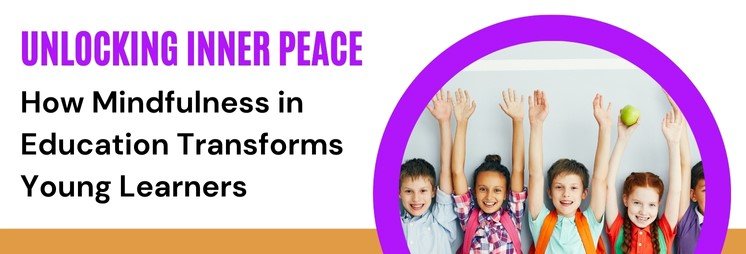
Today’s world, being one of high speed and always demanding, subjects children to psychological stress, academic pressure, distractions of technology, and social issues. These generally impact their emotional balance, mental well-being, and concentration. Although the conventional school system promotes learning, at times it doesn’t focus on the psychological and emotional needs of the students. This is where education mindfulness fills in—a complete practice that not just promotes learning but also aids in building inner peace and emotional intelligence among young students. Understanding Mindfulness Mindfulness is the art of being present in the present. It is observing thoughts, feelings, and environment without distraction or judgment. Instead of responding impulsively, mindfulness teaches a peaceful, reflective response. In the classroom, mindfulness can be taught through easy methods such as deep breathing, quiet reflection, and silent observation. These small but significant practices can have a powerful effect on a child’s capacity to focus, remain calm, and respond to situations with clarity and kindness. Why Mindfulness Matters in Education Contemporary education puts tremendous pressure on students to perform well academically at the expense of their mental health. With the increasing power of social media, fear of failure, and growing competition, children tend to develop anxiety and restlessness. Integrating mindfulness into the educational system addresses these issues by providing a supportive, balanced environment in which students feel safe, calm, and emotionally intelligent. It not only enhances their mental well-being but also paves the way for overall development. Improved Focus and Attention One of the best benefits of mindfulness for children is enhanced concentration. Mindfulness trains the mind to stay in the present moment, so it becomes easier for students to stay concentrated during classes and assignments. If practiced consistently, it makes a child’s concentration on activities stronger without getting distracted easily. As their concentration ability grows stronger, students are able to learn and remember more, which enhances academic performance and the learning process. Enhanced Emotional Control Children are typically still in the learning phase of getting to know and controlling their emotions. Mindfulness trains them to become aware of identifying their feelings, knowing what causes them, and responding calmly instead of spontaneously. This enhanced awareness of themselves enables them to deal with troublesome emotions such as anger, frustration, or sadness in a good and healthy way. With time, they become emotionally stronger and have greater confidence to deal with social and academic difficulties. The Educators’ and Parents’ Role The effective incorporation of mindfulness in education relies heavily on the participation of teachers and parents. Teachers who embody mindful behavior—like peaceful communication, patience, and emotional control—provide a strong model for students to emulate. Likewise, when mindfulness is applied at home, children start to see it as a lifestyle and not merely a classroom exercise. Parents and educators collaborating to aid mindfulness assist in building a stable, caring environment in which children can fully excel. Actual-Life Influence of Mindfulness Most schools in the world today have incorporated mindfulness programs and reported outstanding changes among their students. Formerly challenging or easily distractible children are now exhibiting striking improvements in conduct, concentration, and emotional management. Teachers confirm a more tranquil classroom environment, fewer student-to-student disputes, and an enhanced community. All these real-world examples are ample proof that mindfulness is not a theory but a practical tool for change. Conclusion Educating mindfulness isn’t about throwing more into the already hectic kid’s schedule; it’s doing things differently. By introducing children to moments of quiet, quiet reflection, and emotional awareness, teachers can introduce students to a sense of their own inner calm. This calm is the pathway to improved learning, improved relations, and enhanced mental well-being. In cultivating mindfulness, we are not only molding improved students—we are molding improved human beings who are compassionate, resilient, and emotionally literate. As we progress towards a more mindful method of learning, we prepare our young ones not only for the test, but for life. “Integrate mindfulness in education today to boost student focus, emotional well-being, and classroom success.”
When Studies Become Stress: The Impact of Parental Pressure on Children’s Mental Health
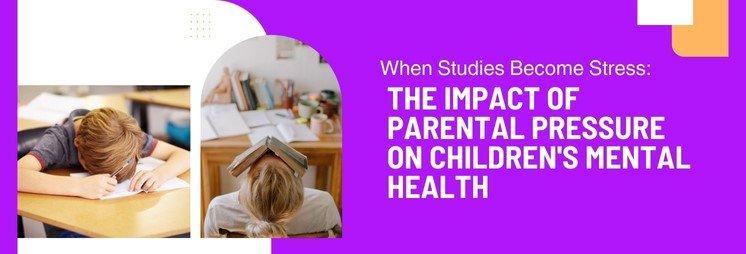
Most children nowadays are under immense pressure to perform well academically, mostly due to high expectations from parents. Although parents might have the best intentions, too much pressure can be detrimental to a child’s mental health, causing anxiety, low self-esteem, and burnout. Finding a healthy balance between support and expectation is crucial for their well-being. Understanding Parental Pressure in School Parental pressure in school is when parents pressure their children extremely to perform well in school. It’s greater than just them wanting them to do well. It actually damages their happiness. It’s vital to understand the difference between pressure and encouragement. Defining Parental Pressure Pressure from parents is a many-headed thing. It might be establishing expectations that are incredibly high and difficult to achieve. It may be checking homework and grades constantly. It may be not giving help when a child is having trouble or comparing children to other children. All these things sum up. Motivations Behind Parental Pressure Why do parents pressure their children so much? Many times, it is because of their own desires and dreams for their children. They may want their child to have things they did not have. There is also pressure from society and fear of their child being behind other kids. This fear can push them to push harder. Cultural Context of Academic Expectations Culture is also a big factor. Certain cultures place a high premium on academic achievement. They may view it as the only way to have a good life. This can put a lot of pressure on kids growing up in these groups. Academic achievement becomes connected to family honor and respect. The Psychological Effects of Academic Stress All that academic pressure can have a serious effect on a child’s mind. Issues relating to mental health may occur when there is excessive academic pressure. It may result in a number of issues. Anxiety and Depression Academic stress has a strong correlation with depression and anxiety. Constant pressure of grades and performance can be a cause for anxiety. Complaining that they’re never good enough can push them into depression. Target-setting can produce a sense of profound unease. Decreased Self-Esteem and Confidence When kids are always pushed, they might begin to feel inadequate. They question their capabilities. This results in lower self-esteem and a sense of self-doubt. It’s difficult to love yourself when you continually feel like you’re not doing enough. Burnout and Loss of Motivation Picture a race with no end. That’s what academic pressure is like. Eventually, the children burn out. They lose enthusiasm for learning. What was exciting previously now becomes a task. Motivation drops, and school becomes a nightmare. Identifying the Signs of Stress in Children It is essential that parents identify the signs of stress in children. Identification at an early stage can make a significant difference. Observe behavior and emotions. Behavioral Changes Search for behavior changes. Is your child irritable? Are they isolated from family and friends? Observe changes in eating or sleeping habits. Also, look out for difficulty concentrating. These may be signs of stress. • Irritability: Easiness to anger or frustration.• Withdrawal: Avoiding social situations.• Changes in sleep: Sleeping excessively or too little.• Difficulty concentrating: Difficulty in concentrating on activities. Emotional Indicators Emotional warning signs are important. Frequent crying, higher anxiety, and hopelessness are warning signs. If your child consistently expresses negative thoughts about themselves, it’s a warning. Low self-esteem is a major stress indicator. Physical Symptoms Stress can even manifest physically. Headaches, stomachaches, and persistent fatigue are all stress indicators. If your child consistently complains about these problems, consider the stress of school. Creating a Healthy Learning Environment A healthier learning environment can be created by parents. It begins with open communication and realistic expectations. Well-being has to be a priority as well. Open Communication and Active Listening Make your child feel safe enough to discuss their feelings. Listen without criticizing. Tell them it’s alright to struggle. Open communication goes a long way. Setting Realistic Expectations Collaborate with your child to establish goals that match their abilities. Don’t push them too hard. Emphasize effort and progress. Realistic expectations minimize stress. Prioritizing Well-being Rather Than Grades Mental and physical health take precedence. Promote breaks, leisure activities, and relaxation. A healthy child performs better in the classroom. Well-being can be the priority. Alternative Strategies for Academic Success There are also other means to help your child succeed. It is not always about grades. Highlight strengths, promote extracurricular activities, and consult professionals when necessary. Strengthening Strengths and Interests Let your child identify what they’re best at. Nurture their interests. Talents develop confidence and make learning fun. Determine their individual strengths. Promoting Extracurricular Activities Extracurricular activities provide balance. Sports, music, and art are ways to relieve stress. They foster holistic development and interpersonal skills. Seeking Professional Assistance There is no need to shy away from seeking professional assistance. Counselors and therapists can offer guidance and coping mechanisms for dealing with stress. It is not shameful to ask for help. It is a demonstration of strength. Conclusion Parental pressure damages children’s mental health and creates anxiety, depression, and low self-esteem. One should create a well-balanced and positive learning atmosphere. Parents should pay more attention to their children’s well-being and use a more integrated model in education. Nurture your child’s interests and well-being. Encourage, not press, them towards achievement. Encourage effort, not perfection—prioritize your child’s mental well-being to help them truly thrive.
The Importance of Quality Time for Parents and Children
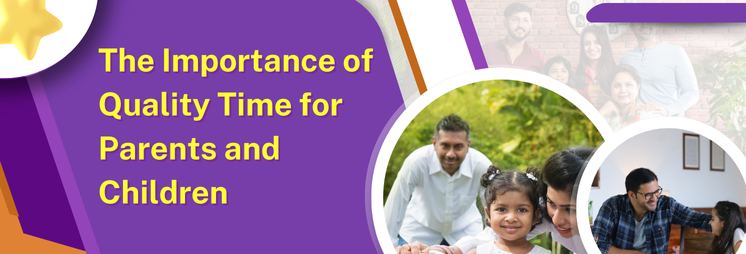
In today’s hectic world, with calendars filled to the brim with work, school, and never-ending obligations, one aspect tends to fall by the wayside—quality time with our kids. Most parents assume that being able to provide financially for their children is the key, yet what children really need is love, connection, and quality attention. Quality time is not about being in the same space as your child; it is about engaging in quality moments that form lasting connections and memories.If you wish to bring up confident, emotionally secure, and happy children, spending time with them is one of the most effective ways to do this. Let’s see why quality time is so important and how you can get the best out of it. Why Quality Time Is Important 1. Builds Parent-Child Relationships Quality time invested together strengthens emotional relationships between children and parents. Ordinary routines of talking, eating, or playing together promote a sense of safety and trust .Example: Daily reading at bedtime or the free flow of conversation during and after their everyday experiences make them feel listened to, cherished, and loved. 2. Fosters Self-Esteem and Confidence When parents participate consciously in their child’s activity—a school assignment, a hobby, or a TV show—it sends them the message that they count. This builds their self-esteem and promotes creativity.Example: Complimenting only success doesn’t work as well as highlighting effort. Mentioning, “I love that you are creative with your sketches,” is a more effective builder of confidence than a mere “Great job!” 3. Improves Communication Skills Normal discussions enhance vocabulary, emotional expression, and listening ability. When parents have meaningful conversation, children are taught to say what they are thinking and feeling freely.Example: Enforce a “No Phone” evening meal rule whereby everyone discusses something that happened in their day. This promotes positive communication and family bonding. 4. Promotes Positive Behavior Kids that get positive attention from their parents are less inclined to get it by negative means. When parents get involved in the life of their child, they are role models for empathy, patience, and kindness. Example: Do family activities such as board games, outdoor activities, or cooking together. These activities teach teamwork, responsibility, and respect in a fun manner. 5. Makes Permanent Childhood Memories Material things lose their luster over time, but the time shared together is something to remember. Quality experiences mold a child’s understanding of family and give them a sense of belonging. Example: Picnics on weekends, giggles at bedtime, or cookie-baking together can be small things but create lasting childhood memories. 6. Reduces Stress and Anxiety As with adults, kids suffer from school stress, societal pressures, and personal struggles. Quality time makes them feel heard, understood, and emotionally safe.Example: Create open forums where children feel comfortable discussing their thoughts and emotions without criticism. Making Time for Your Child in a Busy Schedule Parents often find it hard to balance, but small pockets of quality time can be incredibly powerful. It’s more about prioritizing togetherness over the amount of time spent together. Make daily routines moments of bonding—chat on the way to school, get kids involved in cooking, or have special bedtime routines.Have ” tech-free ” time – Make more than one hour a day of family time with no phone distractions.Engage children in daily activities—grocery shopping, gardening, or even light domestic chores can become enjoyable, communal activities.Organize “Parent-Child” activities— a parent-child walk in the park, an ice cream outing, or a night at the movies will help bond. Conclusion One of the best things you can ever do is to spend quality time with your child. It gives emotional health, fosters self-esteem, and bonds families closer together. When everything is surrounded by distractions in this world, spending time present and attentive to your child is the greatest present you can ever give. “Make every moment count—prioritize quality time and build a lifelong bond with your child today!”
Empowering Teens: Strategies for Emotional Management and Resilience
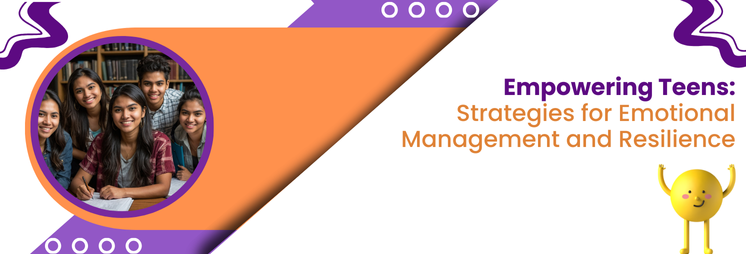
Adolescence is a time of great transformation, growth, and self-discovery. Research has shown that around 70% of teenagers experience intense emotional highs and lows depending on hormonal changes and external stressors and therefore emotional resilience being an essential skill. Studies show that nearly 70% of teenagers experience stress or anxiety due to academic pressure and social stress. Teenagers must contend with academic pressures, peers, and attempting to establish their sense of identity, all of which can sometimes be too much. The key to making it through these years effectively is emotional regulation and resilience.By educating teenagers about managing their feelings and bouncing back from disappointments, they are setting themselves up for a better, healthier future. Some effective strategies to help adolescents achieve emotional resilience and power are as follows: 1. Understanding and Expressing Emotions Recognizing and understanding emotions is the starting point for managing emotions. Encourage adolescents to: 2. Coping Strategies Rather than flight from uncomfortable feelings, teens can be taught constructive ways to manage stress and failure. Healthy coping strategies include Getting help—Get teenagers to speak with someone that they trust when they feel depressed, whether it is a parent, teacher, school counselor, or friend. 3. Developing Resilience Through a Growth Mindset Resilience is bouncing back from adversity. To build resilience, teenagers should 4. Gratitude and Positive Thinking Practice A positive attitude can make a tremendous impact on the way teens manage emotions. Have them: 5. Promoting Positive Social Relationships Friendships and social support are important to emotional health. Adolescents should: 6. Balancing Screen Time and Face-to-Face Interactions Technology and social media are such a big part of teenagers’ lives, but too much screen time can have an impact on emotional well-being. Encourage: 7. Seeking Expert Help When Necessary It’s not embarrassing to get help, and in fact, getting help is a sign of strength. If a teen is experiencing persistent sadness, worry, or feeling overwhelmed, getting help from a therapist or counselor can literally transform their life. Therapy provides tools to manage emotions effectively and develop resilience. Being honest about talking about mental health can also break down stigma and make teens feel more at ease reaching out when they need to. Conclusion Helping teens build emotional resilience equips them to handle life’s ups and downs with confidence and strength. With the right support, they can grow into emotionally balanced and capable individuals. Let’s encourage and guide them on this journey! Encourage the teens in your life to start building these essential skills today! “Empower the teens in your life today—help them build resilience, confidence, and emotional strength for a brighter future!”
Common parenting mistakes and how to avoid them
Parenting is a wonderful journey of love, joy, and learning. Yet, it has its share of challenges too, and all mothers err at some point. The good news is that parenting is an ongoing learning process, and knowing the most common mistakes can help you make a deliberate attempt to steer clear of them. Here’s a straightforward and optimistic guide for mothers to follow and parent confidently. 1. Expecting Perfection from Yourself or Your Child Mistake: Most mothers feel compelled to be perfect or insist on their children acting flawlessly. This results in stress as well as unrealistic expectations.How to Avoid It: Accept imperfection! Parenting is a learning experience, and errors are part of the process. Rather than striving for perfection, be present and attuned to your child’s needs. Foster a positive atmosphere where errors are viewed as opportunities for learning. 2. Spending Too Little Quality Time Mistake: In this busy day and age, most parents find themselves engrossed in work, cleaning, or social media, inadvertently forgetting quality time with their kids.How to Avoid It: Commit even a little bit of time each day to spending time with your child. It can be a simple activity like eating dinner together, reading a bedtime story, or playing a quick game. Your presence is what’s needed over the amount of time—what matters is being fully attentive to your child. 3. Comparing Your Child to Others Mistake: Every child grows up at their own rate, but most mothers compare their child’s accomplishments, manners, or achievements with others’ and cause themselves undue stress.How to Avoid It: Appreciate your child’s individual journey. Pay attention to his or her personal strengths and improvements instead of comparisons. Praise and encouragement promote confidence and self-esteem in children. 4. Overcontrolling or Overprotecting Mistake: It is only natural to protect your child, but too much control can spoil them and prevent them from becoming independent and competent problem solvers.How to Prevent It: Let your child explore, decide, and even fail at something small. Give direction but not control and support problem-solving so that they can become resilient and confident. 5. Not Setting Clear Boundaries Mistake: Certain mothers have problems setting rules and boundaries, causing confusion and behavior problems.How to Avoid It: Be predictable with rules and expectations. Clearly define what is acceptable behavior and the consequences of rule breaking. Balanced discipline—firm but loving—is essential in teaching children responsibility and respect. 6. Neglecting Emotional Needs Mistake: In the haste of daily activities, it is simple to ignore a child’s emotional needs.How to Avoid It: Be sure to take emotional stock of your child. Practice open communication, listen judiciously, and acknowledge their feelings. A safe emotional connection makes children feel loved and comprehended. 7. Over-scheduling Kids Mistake: Too many mothers sign their children up for too many activities, believing it is good for them, but it can create stress and burnout.How to Prevent It: Use some combination of structured activities, free play, and relaxation. Give your child the freedom to choose activities they love instead of piling too many on them. 8. Forgetting Self-Care Mistake: Some mothers are so focused on taking care of their children that they neglect their own health.How to Avoid It: Caring for yourself is not selfish—it’s a necessity. Make sure you rest well, eat healthily, and take a break when necessary. A healthy and happy mother can best take care of her child. Conclusion All mothers experience parenting challenges, and errors are an integral part of the process. The secret is to learn, adjust, and continue developing with your child. By being aware of these typical errors and making minor adjustments, you can have a more positive and rewarding parenting experience. Keep in mind, your love, patience, and presence are most important. You’re doing great, Mom! Parenting with love, learning with patience—grow together every day!
The Role of Mindfulness in Education Creating a Calm and Focused Learning Environment
In today’s fast-moving world, students tend to be stressed, distracted, and overwhelmed. With too many things competing for their attention—schoolwork, online sites, and personal concerns—staying focused on schoolwork can prove to be a struggle. That is where mindfulness comes in. Mindfulness is the act of staying present in the moment, concentrating on our thoughts, emotions, and environment without judgment. By integrating mindfulness into classrooms, schools can make students feel more comfortable, focused, and ready to learn. What is Mindfulness? Mindfulness involves paying attention to what’s happening right now. It’s straightforward, like listening to your surroundings, focusing on your breath, or feeling your feet press against the ground. This practice allows people to take a break from the endless thoughts running through their heads. When students use mindfulness techniques, they become more relaxed and at ease, which helps them to handle their emotions better. Why is Mindfulness Important in Education? Implementing Mindfulness in Classrooms Instructors are very likely to implement mindfulness indirectly, and students will be sure to remain calm and attentive. The following tasks are easy to accomplish: 1. Deep Breathing Deep breathing is the most elementary mindfulness skill. For several minutes, the teacher can lead the class through slow, deep breathing and slow exhaling alike. Their minds are refreshed and quieted through this. 2. Mindful Listening Students can choose to close their eyes and hear ambient sounds, like the teacher’s voice, the leaves rustling, or the birds chirping. They become more sensitive and better listeners as a consequence. 3. Practice Gratitude The students can say thanks to each other at the beginning of every day. They will be able to appreciate good things in life and begin the day on a good note because of it. 4. Conscientious Strolling Students can practice mindful walking during recess by noticing each step, the sensation of their feet on the ground, and the rhythm of the movement. They will better understand their environment and their bodies as a result. 5. Meditation Using Body Scan Students can close their eyes and start concentrating on different parts of their body, beginning with their toes and working upwards towards their head. They relax and notice any tension within their body. 6. Benefits for Teachers Mindfulness is not just for students—it also helps teachers. A calm teacher creates a peaceful classroom. When teachers practice mindfulness, they become more patient, understanding, and better at handling stress. They can also use mindfulness to manage classroom behavior and create a positive learning atmosphere. Examples of Mindfulness in Schools in Real Life Mindfulness is applied to schools worldwide for the benefit of children. A few examples include: United States: Children in a school mindfulness program practice morning breathing exercises daily. Teachers noted that students behaved more positively during class and stayed more concentrated. India: As a way of helping students overcome stress and improving their performance in school, there are schools offering meditation classes. United Kingdom: Friendships among students have enhanced, and bullying has been reduced due to mindfulness activities. Mindfulness at Home Families can also promote mindfulness in the home. These are some of the activities families can practice together: Mindful Eating – Slow eating while focusing on the taste, texture, and smell of the food. Bedtime Relaxation – Deep breathing or listening to soothing music prior to sleep. Journaling – Putting into words their feelings and what they go through every day as a way of expressing feelings healthily. Spending Time Outdoors— Taking a walk and observing the beauty of birds, trees, and the sky. Challenges of Implementing Mindfulness in Schools Despite these challenges, schools can successfully implement mindfulness by: Transform your classroom into a haven of calm and focus with just a few minutes of mindfulness each day!
Building Lifelong Bonds with Positive Parenting

Parenthood is the most rewarding and challenging experience one can have. Every parent would love to see their children be happy, assured, and adjusted, but more is needed to ensure this besides offering them sustenance. Positive parenting is what ensures a stable parent-child bond that is supported by trust and connection. What is Positive Parenting? Positive parenting is a method that aims at respect for each other, communication, and encouragement as opposed to punishment and control. Positive parenting involves child guidance through empathy, the use of clear limits, and reinforcing positive behavior constructively. The approach develops the sense of safety, self-discipline, and emotional intelligence among children. Why Trust and Connection Matter? Trust and connection provide the foundation of a healthy relationship between parents and children. Trust makes children open, ask for advice, and build confidence in themselves when they feel understood and safe. Trust builds emotional resilience and helps children cope with problems with optimism. Practical Strategies to Help Build Trust and Connection with Your Child Talk with Empathy Personal Story: Sarita, a mother of two, found that by actively listening to her children and acknowledging their feelings, she was able to build a stronger bond with them. When her son was upset about a school project, she said, I understand that you’re feeling frustrated. Let’s work on it together. This approach reassured him that his emotions were valid and helped him feel supported. Be Present and Engaged In the present day and age of distractions that surround us, it is quite possible to be physically available but absent from the heart. Make a conscious effort to spend quality time with your child by putting away the screens and providing undivided attention. Do something, they love, like reading, playing, or simply talking. These experiences shape memories for a lifetime and strengthen your relationship. Set Clear and Fair Boundaries Kids do their best when they know what is expected of them. Having consistent rules and boundaries makes them feel safe. But it’s essential to enforce rules with kindness, not rigidity. Don’t say, Because I said so. Say, we don’t hit because it hurts others, and we want to be kind. Clear explanations foster cooperation and respect. Encourage Independence and Responsibility Trusting your child with responsibilities suited to their age increases their sense of capability and confidence. Ask them to make choices, from picking their clothing to organizing their day or contributing to household work. Commend their efforts and achievements and reinforce their sense of ability. Discipline with Love and Guidance Positive parenting eschews punishment and rather emphasizes learning through understanding and redirecting. Rather than reprimanding a child for an error, turn it into a teaching moment: I see you spilled your juice. Let’s get a towel and clean it up together. This approach fosters problem-solving and responsibility without harming self-esteem. Express Love and Affection Daily Children need reassurance that they are loved unconditionally. Simple gestures like hugs, kind words, and affirmations go a long way in reinforcing security and trust. Telling your child, “I love you,” or appreciating their efforts with, “I’m proud of you,” helps them feel valued and connected to you. Be a Role Model Children learn from observing their parents. Show the values you wish them to adopt, including kindness, patience, and honesty. If you do something wrong, own up to it and apologize. Humility is taught when they see that you are accountable and will improve yourself. Create Rituals and Traditions Family rituals and traditions build a sense of belonging. A bedtime story, a weekend activity, or a special handshake—whatever it is, these rituals build consistency and deepen emotional connections. Teach Emotional Intelligence Assisting children to know and control their emotions gives them life skills. Ask them to label their feelings and communicate how they can deal with them. For example, if they’re angry, teach them to breathe deeply or explain their feelings. This habit helps in building resilience and emotional well-being. Celebrate Effort Over Perfection Focusing on effort and not outcome constructs self-esteem and motivation. Instead of complimenting results, commend persistence and diligence: “You tried so hard on that puzzle! I appreciate how you didn’t give up even when it was difficult.” This way of thinking generates love for learning and development. Interactive Elements Parent-Child Activities The Long-Term Benefits of Positive Parenting Children who are nurtured through positive parenting develop stronger self-esteem, more effective problem-solving, and improved emotional management. They become more likely to have healthy relationships and deal with adversity with resilience. The rapport and trust forged in childhood lays the groundwork for a lifetime of mutual respect and honest communication. Start building lifelong bonds with your child today through positive parenting!
How Can Parents Help Their Teenage Kids Navigate Common Challenges

Teenage parenting can be rewarding but demanding. Adolescence is a defining moment of development, and teenagers may experience numerous problems. From academic stresses to social issues, the adolescent years can be volatile. Still, parents with the proper methodology can become catalysts in supporting their teenage children through these ordeals and emerging successfully. Some techniques will prove beneficial in this regard. 1. Build Open and Honest Communication Teenagers usually feel judged. Providing a space where they feel safe to discuss without fear of being judged is important. Promote open discussions by: 2. Help Them Manage Academic Pressure Teenagers often struggle with the stress of school, exams, and future career choices. Support them by: 3. Support Their Emotional Well-Being Adolescence comes with mood swings, self-doubt, and anxiety. To help your teen with their emotional well-being: 4. Guide Them Through Peer Pressure and Friendships Friendships are important in teenage life, but peer pressure can sometimes lead to bad decisions. As a parent 5. Talk About Digital Safety and Social Media Use Teens spend a lot of time online, and while the internet is a great tool, it also comes with risks. Help them stay safe by: 6. Teach Healthy Habits Teenagers need a balance of physical, mental, and emotional health. Encourage: 7. Respect Their Independence While Setting Boundaries Teens crave independence, but they still need parental guidance. Find the balance by: 8. Help Them Build Self-Confidence Confidence is key to tackling life’s challenges. Boost their self-esteem by: 9. Discuss Future Goals Without Pressure The future can feel overwhelming for teens. Support them in planning their goals by: 10. Be a Role Model Teenagers learn more from actions than words. Set a good example by: Conclusion: Parenting a teenager requires patience, understanding, and adaptability. While challenges are inevitable, your support and encouragement can make a world of difference. By fostering open communication, teaching life skills, and being there when they need you, you can help your teen navigate this phase with confidence and strength. Remember, your love and guidance are the biggest gifts you can offer them! “Your unwavering support and love can empower your teen to overcome any challenge”
Guided Parenting How Mentorship Helps Parents Create Positive Change

Parenting is an adventure of evolving love, challenges, and never-ending education. Even though every parent wants the best for their child, raising self-assured, content, and well-behaved kids can occasionally be extremely difficult. Mentorship-based guided parenting has a significant impact by providing parents with the necessary resources, direction, and support to bring about positive changes in both their own and their children’s lives. The Role of a Parenting Mentor A parenting mentor is an advisor who understands the highs and lows of parenthood. Unlike general advice found in books or online, mentoring focuses on the dynamics, challenges, and goals of your family. Mentors assist parents without passing judgment, offering strategies, concepts, and insights to improve decision-making, communication, and emotional ties. They can address issues related to discipline, time management, emotional health, or the parents’ self-care. Why Mentorship Matters There is no single, all-purpose parenting manual. Every child is unique, and so are the situations that shape their upbringing. A mentor helps parents make sense of the mess by providing tailored guidance. Mentorship allows parents to break out of self-doubt and feel more confident in their parenting choices. Whether dealing with tantrums, school-related issues, or sibling rivalry, a mentor offers practical advice that reassures parents they are doing the right thing. Healthy communication is essential in any relationship, including between a parent and child. A mentor can teach techniques for open dialogue, listening, and empathy, fostering deeper emotional connections. Constructive parenting encourages children through support, appreciation, and respect rather than fear of punishment or criticism. Mentors help parents implement techniques that promote children’s self-esteem while maintaining discipline and rules. Real-Life Impact of Guided Parenting Consider a parent struggling to connect with their teenage child. A mentor might suggest ways to bridge the generation gap, such as spending time together, respecting the teen’s emotions, and using “I” statements to express feelings without blame. Over time, these small changes build trust and open communication within the family. For a working parent managing both work and family, a mentor might recommend practical time management methods, such as mindfulness practices to better handle stress. “Connect with a parenting mentor today and start building a brighter, more empowered future for your family!”
Cultivating Love and Gratitude in Children

Today, it’s important to provide children with opportunities for both academic achievement and personal development. Writing practice can help with both. Despite the many technological distractions, fostering love and gratitude in young people is crucial. These traits not only shape their personalities but also strengthen their relationships and overall character. The Importance of Love and Gratitude Self-esteem is based on love. Children who are loved and cared for understand self-esteem better and meet challenges without a hitch. With love, a child can develop sympathy, respect, and understanding with others. They can learn how to engage in healthy, constructive interactions and build emotional support. A child who feels loved is more likely to take risks and develop emotional resilience. Happiness, however, is closely tied to thankfulness. Kids who practice appreciation tend to have a positive outlook on life. Children who practice gratitude learn to be less preoccupied with what they lack and more appreciative of the little pleasures in life. They focus more on what is good rather than on what is missing. How Parents and Educators Can Foster Love and Gratitude Lead by Example Children learn best by observing the adults around them. It’s important for parents and educators to model a lifestyle of love and praise. Words and actions should be expressed with love. Hugging a child, telling them how well they are doing, or simply listening to them can make a big difference. When adults show gratitude, children are likely to follow suit. Simple gestures like saying “thank you” set the foundation for children to exhibit the same behavior. Communicate Stories Encourage children to express their love and appreciation. Ask them what they are grateful for each day. Whether it’s during a family meal, with a friend, or about a beloved toy, these short moments of reflection can be incredibly powerful. Create a gratitude journal for your child, where they can write or draw what they are thankful for. This helps them develop positive thinking. Make Thanksgiving a Daily Practice Show appreciation as a family tradition. A simple way to do this is by listing three things you are grateful for before going to bed or at night. This encourages children to think about the positive events of the day. Involve Them in Mindfulness Mindfulness teaches children to live in the present moment and fosters gratitude. When children focus on the present, they are more likely to appreciate small, often overlooked, values. Practices like breathing exercises, guided meditation, or quiet time can help develop mindfulness. Set a Gratitude Routine Use gratitude as a family tradition. Writing three things you appreciate before bed or in the evening can be an easy way to do this. This allows children to reflect on the good things that happened during the day. The Long-Term Benefits Children raised in a loving and appreciative atmosphere will grow up to be emotionally sophisticated and kind. They will have a sense of community, resilience, and excellent interpersonal skills, all of which will aid them in both personal and professional life. They can develop deep connections and face life’s challenges with optimism. Additionally, children who are taught gratitude are less likely to develop entitlement or materialistic attitudes. Gratitude fosters contentment, leading to a more balanced and fulfilling life. Join us in fostering love and gratitude in our children, empowering them to create a compassionate and hopeful future for all!
Fostering Creativity in Kids: Tips for Parents and Educators
Creativity is a vital skill that helps children think outside the box, solve problems, and express themselves. In a world driven by innovation, nurturing creativity is more important than ever. As parents and educators, we can provide opportunities for children to develop their imagination and critical thinking. Creativity isn’t limited to artistic expression—it’s about approaching challenges with curiosity and originality. Encouraging curiosity from a young age fosters a love for learning and discovery. Ask open-ended questions, engage in brainstorming activities, and allow children to experiment without fear of failure. Providing unstructured playtime allows children to explore and create freely. Activities like building with blocks, painting, or crafting help children develop problem-solving and fine motor skills. Encourage imaginative play by providing props and costumes that inspire role-playing. Expose children to diverse experiences by introducing them to different forms of art, music, and literature. Take them to museums, theaters, and cultural events to broaden their horizons. Discuss what they observe, encouraging them to share their thoughts and interpretations. A supportive environment boosts creativity. Praise effort rather than results and celebrate originality. Provide constructive feedback that focuses on improvement rather than criticism. Avoid over-scheduling activities, leaving room for exploration and spontaneous creativity. Collaboration fosters creative thinking. Group activities, such as team projects or drama performances, allow children to learn from others and share ideas. Working together enhances communication, teamwork, and problem-solving abilities. Problem-solving games and puzzles stimulate critical thinking. Encourage children to ask questions, make predictions, and test their ideas. Incorporate STEM activities, like building models or experimenting with science kits, to promote hands-on learning. Reading and storytelling spark imagination. Read books with diverse themes and characters, encouraging discussions about the storylines. Ask children to create their own stories or act out scenes, enhancing both creativity and language skills. Parents and educators should lead by example. Demonstrate creativity in daily tasks—whether it’s cooking, decorating, or problem-solving—and involve children in the process. Showing enthusiasm for creative pursuits inspires children to follow suit.
Raising Emotionally Intelligent Children: A Guide for Parents
Parenting in today’s fast-paced, technology-driven world presents unique challenges and opportunities. As parents, our role extends beyond providing for our children; it involves nurturing emotional intelligence (EI), resilience, and empathy. Emotional intelligence is the ability to understand, manage, and express emotions effectively. Studies reveal that children with high EI are more likely to excel academically, build strong relationships, and lead fulfilling lives. Emotional intelligence comprises five key components—self-awareness, self-regulation, motivation, empathy, and social skills. Teaching these skills from an early age lays the foundation for healthy emotional development. Children who develop EI are better equipped to handle stress, resolve conflicts, and make responsible decisions. Self-awareness is the ability to recognize one’s emotions and understand their impact. Encourage children to label their feelings and express them openly. Use phrases like, “I can see you’re feeling frustrated,” to help them identify emotions. Storytelling, journaling, and role-playing are effective tools for fostering self-awareness. Self-regulation enables children to manage their emotions and reactions. Parents can model calm behavior during stressful situations to demonstrate emotional control. Breathing exercises, mindfulness activities, and visualization techniques can help children calm down when overwhelmed. Establishing routines and clear boundaries also promotes emotional stability. Empathy is the ability to understand and share the feelings of others. Reading books that highlight empathy, discussing characters’ emotions, and encouraging acts of kindness are great ways to develop this skill. Teach children to listen actively and validate others’ emotions, reinforcing the value of compassion.
Addressing Behavioral Challenges in Children with Empathy
Behavioral challenges in children can be tough for parents to manage but addressing them with empathy can transform these situations into learning opportunities. Children often act out as a way of expressing emotions they can’t verbalize or to cope with unmet needs. As parents, understanding the root cause of their behavior is key to managing it constructively. When faced with challenging behavior, the first step is to pause before reacting. Taking a moment to breathe and compose yourself allows you to approach the situation calmly, which helps de-escalate tension. A calm parent sets the tone for a calmer child. It’s also important to acknowledge your child’s feelings. Simple phrases like, “I can see you’re upset” or “It sounds like you’re frustrated” validate their emotions and show that you’re listening. This builds trust and encourages open communication. While empathy is essential, it doesn’t mean allowing unacceptable behavior. Setting clear and consistent boundaries is necessary for helping children understand limits. For example, you can say, “I understand you’re upset, but hitting is not okay.” This communicates that while their feelings are valid, certain actions are not acceptable. Teaching problem-solving skills is another critical step. If your child struggles with losing a game or sharing toys, guide them in finding solutions. Help them think through their emotions and identify alternative ways to express or manage frustration. Problem-solving not only diffuses immediate conflict but also builds resilience and independence in the long run. Children are keen observers, learning as much from what parents do as from what they say. Modeling desired behavior—such as patience, kindness, and emotional regulation—sets a powerful example. When they see you managing stress constructively, they’re more likely to imitate those behaviors. Additionally, reinforce positive actions with praise. Acknowledging even small victories, like calming down after being upset, can encourage them to repeat those behaviors in the future. If behavioral challenges persist or feel overwhelming, seeking professional support can be incredibly helpful. Counselors or therapists can offer tailored strategies and insights to address specific concerns. By approaching behavioral challenges with empathy, clear communication, and consistent boundaries, parents can create a supportive environment where children feel understood and grow emotionally.
Building Resilience in Children: A Step-by-Step Approach
Resilience is an invaluable skill that helps children navigate life’s challenges with confidence and adaptability. It’s not something kids are born with—it’s developed through experiences, guidance, and consistent support from caregivers. Building resilience equips children to handle setbacks, solve problems, and face difficulties with a positive mindset. The first step in fostering resilience is to create a safe and supportive environment. Children thrive when they feel loved, valued, and secure. This foundation of trust gives them the confidence to take risks and bounce back from failures. Equally important is teaching them emotional awareness. Helping children recognize and name their emotions is crucial for building resilience. For example, when they’re upset, guide them with questions like, “Are you feeling frustrated or sad?” This practice helps them understand their feelings and gives them tools to manage emotions constructively. Parents play a vital role in modeling resilient behavior. Children learn by observing how adults handle challenges. Share your own experiences with setbacks and show them how you persevered. Demonstrating calmness and problem-solving in difficult situations can inspire them to adopt a similar approach. Encouraging problem-solving skills in children is another effective strategy. Instead of fixing every issue for them, help them think through possible solutions. For example, if they forgot their homework, discuss how they can avoid the same mistake in the future. Guiding them through these moments empowers them to take responsibility and learn from their experiences. A growth mindset is another cornerstone of resilience. Teach your child to see challenges as opportunities to grow, rather than insurmountable obstacles. Celebrate effort and progress rather than focusing solely on results. Phrases like, “You worked so hard on that project—great job!” emphasize the importance of persistence and learning. Teaching coping strategies is equally important. Introduce simple tools like deep breathing exercises, journaling, or mindfulness activities to help them manage stress. Encouraging healthy risks is another way to build resilience. Whether it’s trying a new sport, speaking up in class, or meeting new friends, these experiences teach kids to step out of their comfort zone and grow. Finally, provide opportunities for responsibility. Assign age-appropriate tasks, like helping with household chores or taking care of a pet. These responsibilities foster a sense of accomplishment and boost confidence. Remember, patience and encouragement are key. Resilience isn’t built overnight—it’s a gradual process that requires consistency and support. By following these steps, parents can help their children develop the resilience needed to thrive in an ever-changing world. Resilient children grow into adults who face life’s challenges with strength, adaptability, and optimism.
The Transformative Power of Music and Dance on Student Development: Real-Life Stories and Insights
Music and dance are universal languages that touch the soul, but their influence goes far beyond mere enjoyment. In schools, these creative arts play an essential role in fostering student growth, shaping their cognitive, social, and emotional skills in profound ways. Through real-life examples, let’s explore how music and dance have impacted student development in various dimensions. Developing Confidence Through Dance: Emma’s Journey Take Emma, a once-shy 10-year-old who struggled with speaking up in class and engaging with peers. Her teachers and parents noticed her tendency to be introverted, which often limited her participation in activities. When the school offered a weekly dance class, her mother encouraged her to join. Initially hesitant, Emma slowly started immersing herself in the movements and rhythms. Over a few months, Emma transformed; she began to display confidence, expressing herself freely not only in dance class but also in other academic settings. Through dance, Emma found a new way to connect with her body and emotions. Her self-confidence bloomed as she learned to trust her movements and synchronize with others. The discipline and expressive power of dance helped her overcome social anxiety, showing just how impactful physical expression can be in building self-assurance. Today, Emma is one of the most enthusiastic participants in school events, a change her teachers credit to the confidence she developed through dance. Enhancing Cognitive Skills Through Music: Ryan’s Story Music is a powerful tool for cognitive development, and research supports this connection. Ryan, a student struggling with focus and attention, experienced this first-hand. His teacher suggested he join the school’s music club to improve his concentration. With guitar lessons twice a week, Ryan started learning musical theory, practicing chords, and developing his ear for rhythm. The process of mastering an instrument requires immense patience and dedication, and for Ryan, these music lessons translated into better focus and concentration. Within a few months, his teachers noticed a shift: Ryan’s attention span had increased, and he could focus better in class. Studies show that music engages multiple areas of the brain simultaneously, aiding memory, problem-solving, and spatial-temporal skills. Ryan’s progress is a testament to how music sharpens cognitive abilities and even academic performance. Building Emotional Resilience: Sofia’s Dance Therapy Dance can be a therapeutic outlet for students facing emotional challenges. Sofia, a student at a local high school, was going through a challenging time at home due to her parents’ divorce. This emotional turmoil affected her mood and academic performance, leaving her feeling isolated. When the school counselor recommended dance as an emotional outlet, Sofia hesitantly agreed. In the dance studio, Sofia found a safe space to channel her emotions. The movement and rhythm allowed her to express feelings she struggled to communicate verbally. The act of dancing became a form of release, enabling her to process complex emotions and build emotional resilience. Sofia’s grades gradually improved, and she regained her cheerful spirit. Dance became her sanctuary, illustrating how creative outlets can support students through personal challenges. Encouraging Social Skills and Teamwork: The Impact of Group Performances Group music and dance performances are excellent for teaching social skills, collaboration, and discipline. In one school, a group of students was chosen to perform a cultural dance at a citywide competition. Some of these students had little experience in dance, while others had stage fright. The preparation phase required them to work together, listen, and adapt to one another’s strengths and weaknesses.
Effective Strategies for Integrating Music and Dance into the School Curriculum
Music and dance enrich education by providing students with creative outlets that nurture cognitive, social, and emotional growth. Integrating these arts into the curriculum fosters well-rounded development and engagement. Here are some strategies to effectively incorporate music and dance into schools. Embedding music and dance within academic subjects can enhance understanding by making lessons more immersive. For example, history lessons gain new depth when complemented by period music or folk dances, which allow students to grasp cultural contexts and values more fully. In math, rhythmic patterns and counting beats can reinforce concepts like fractions and patterns, making abstract ideas more tangible. For instance, a Grade 5 class studying the Renaissance may practice simple Renaissance dances, gaining insight into historical shifts in art and culture. Dedicated music and dance periods create a structured opportunity for students to explore these arts regularly. Schools that allocate specific periods to music and dance, led by trained teachers, offer students a consistent chance to develop both technical and theoretical skills. This exposure, from learning instruments to exploring genres, builds confidence and competence over time, and annual showcases give students a platform to celebrate their progress. Student-led clubs are another great way to engage students in music and dance. Clubs allow students to explore their interests, choreograph routines, and take ownership of their creative projects. Through these clubs, students can develop teamwork and leadership skills, building a sense of community around the arts. In some schools, dance and music clubs also mentor younger students, fostering an inclusive and supportive culture. Music and dance also play a therapeutic role in supporting emotional well-being. Schools may offer arts-based therapeutic sessions for students facing emotional challenges, collaborating with dance and music therapists to create safe spaces for self-expression. These sessions can help students manage stress, build resilience, and improve emotional health. Hosting cultural events, such as talent shows or international day celebrations, allows students to showcase their talents while celebrating diversity. By organizing annual events, schools foster community spirit and provide a platform for students to share and appreciate each other’s cultural backgrounds. Such events promote cultural understanding and allow students to take pride in their heritage. Technology can also enhance music and dance learning, especially in remote settings. Digital tools, like virtual instruments, rhythm apps, and dance tutorials, make learning interactive and accessible. These tools have proven valuable in maintaining students’ connection to music and dance, even during times when in-person instruction isn’t possible. Schools can leverage these resources to keep students engaged and creative, regardless of location. Incorporating music and dance into the school curriculum supports students in building essential skills and personal resilience. Whether through dedicated periods, interdisciplinary activities, student-led clubs, or technology, these arts can be woven into many aspects of school life, creating a vibrant and holistic educational environment. By integrating music and dance into their daily routines, schools nurture students’ cognitive, social, and emotional development.
How Arts Education Advances the Cause of Inclusion and Cultural Understanding
In today’s ever-globalizing world, little can be said in objection to the importance of inclusivity and cultural awareness. Perhaps one of the best ways to foster these values among young people is through arts education. From visual arts to music, dance, and theatre, arts education helps students investigate diverse cultures, perspectives, and experiences. It fosters empathy and social cohesion while breaking stereotypes-a strong drive toward inclusive communities. The Role of the Arts in Cultural Expression The arts have always been a reflection of culture. Every society, in every era of history, has used art to express its beliefs, values, and traditions. It is through the arts that students are able to learn more about the cultures from which these particular art forms emanate. This may be in the form of classical music studies from Europe, traditional dances studied from Africa, or indigenous art of Australia-through arts education, students can explore the rich tapestry of human culture. Exploring Diverse PerspectivesArts education allows students to move outside their particular cultural experiences and try on the experiences of others. In this way, arts education fosters empathy and allows the student to value human experience in its many manifestations. For example, studying the historical context of a piece of music or the cultural significance of a dance would provide greater insight into the people and cultures which produced these artistic expressions. Encouraging Cross-Cultural Dialogue Arts education also provides a portal for cross-cultural dialogue, where students share their own cultural experiences and learn from others. These sharing build mutual respect and understanding, breaking down those barriers often separating individuals from different cultural experiences. Arts Education and Inclusivity Inclusion in education calls for an approach to learning in which diversity among students is esteemed and valued. Arts education makes an effective contribution to inclusion partly because of the possibilities it allows for multiple forms of expression and participation. Providing Multiple Avenues for Expression Arts education has the great strength of being multisemiotic in nature. Whether through painting, sculpture, music, or dance, students are afforded opportunities for self-expression perhaps not as readily available through more traditional academic subjects. This is of primary importance for those students who may struggle with language or other conventional modes of communication. The arts afford these students an alternative outlet through which to express themselves and participate in the learning process more fully. Encouraging Collaboration and Teamwork Most of the arts, like theater and dance, require cooperation and group effort. There, students have to collaborate with each other to establish a cohesively presented performance or production, which inculcates a sense of unity and belongingness in the students. Such a collaborative process also develops in students a degree of empathy and respect for their peers by being in a position to take into consideration others’ responses and contributions for the successful performance. Social and Emotional Learning In addition to the development of cultural understanding and inclusion, arts education plays a critical role in students’ social and emotional learning. Social and emotional learning consists of developing life and work skills including self-awareness, self-management, social awareness, and relationship skills. Empathy through the Arts One of the most important social and emotional competencies that arts education is supposed to cultivate is empathy. While the students continue experiencing the stories and experiences of others through art, they are in a position to view the world through more various perspectives. This builds a great sense of empathy toward the emotions and experiences of those different from themselves. This makes them well-rounded citizens, hence building a more inclusive and compassionate community. The Impact of Arts Education on Academic Achievement Besides these social and emotional benefits, participation in arts education has proved to have a positive effect on academic achievement, too.
The Role of Music and Dance in Fostering Creativity and Innovation

The first acknowledged attributes of music and dance are artistic expression and emotional effect. However, music and dance play a far-reaching role beyond entertainment. Such art forms act as potent catalysts for creativity and innovation, thus enabling people to navigate an ever-changing environment which demands the use of a collection of skills. In this respect, music and dance develop innovative ideas and personal growth through expressive feelings, problem-solving behavior, and collaboration. Dance as an Innovation Medium Just like music, dance stirs creativity within a person through the concurrent integration of physical movement with emotional expression. It lets persons learn abstract ideas in their bodies; one develops the spatial and kinesthetic awareness that transposes beyond regular modes of thinking. The Intersection of Music, Dance, and Technology In the new modern digital era, intermixed music, dance, and technology open ways towards new horizons of creative expression. Enriched by virtual instruments and DAWs and other technological innovations, musicians may experiment with sounds that have recently been inaccessible. Moreover, these tools have democratized music creation because they have enabled people without formal education to tap into their creative potential. Similarly, virtual reality is changing dance. Dancers now can perform in virtual spaces without any physical restraint, opening up new means and innovative ways of choreography and audience interaction. Such a union of dance and technology not only stretches the dimensions of performance but also helps in innovative thinking on the way one can experience the dance. Music and Dance in Personal GrowthFurther than creativity and innovation, music and dance can serve as a powerful means for developing one’s personality. Playing a musical instrument or mastering a particular kind of dance is possible only through discipline, patience, and stamina. All these qualities are necessary not only for the growth of an artist but also for being successful in other life domains. Moreover, music and dance both foster emotional intelligence in an individual through understanding and giving expression to one’s emotions. This is a very important ability to apply problem-solving that is of a creative nature and in leadership; therefore, this makes the two subjects imperative in personal and professional development. Music and Dance in EducationMusic and dance should definitely have a proper place within education with the impact of powers on creativity and innovation. The schools that provide these arts in their curriculum give the students the tools they need to be a success. Studies have proven that students participating in music and dance tend to perform better academically due to the fact that these disciplines improve cognitive and emotional abilities that also apply to other subject areas, such as mathematics and science. Music and dance are crucial aspects in creating creativity, innovation, and personal development. It covers the mind and body, performing skillfully because of abstract thinking, the expression of emotions and problem-solving, all that is required to face more complex situations of our contemporary world. And because these challenges constantly evolve into new ones, music and dance, both educationally and in individual development, will become indispensable as creative potential in people and innovation across disciplines come unlocked.
Creating an Inclusive Preschool Classroom: Strategies for Supporting Diverse Learners

Why child diversity should be respected in the earliest stages of their development In the current society, all preschools have to be available to all students to ensure that every child can feel that he or she is loved. That is, it is based on the belief that children as they are, have differences that include disability, learning and culture. Therefore, inclusion should not have a meaning which is limited to contemplating a child with a disability, but it is about the type of class created to meet each learner. 1. Students in classrooms today are more diverse and as such, the teachers cannot escape certain aspects of diversity. Childcare learning environment may include special learning facility requirements, children of ethnic origin, and different learning abilities. And it is only after drawing the attention of these aspects to the people that they will be willing to embrace diversity in others. Learning Styles: This can equally apply to children such that they may also have the four modalities of visualization, hearing and feeling divided equally. If these can be brought to the classroom, modifying the given lessons to these may be useful in increasing participation. Abilities and Disabilities: Children with physical, cognitive or sensory impairment require special education that would help them socialize with other children. Cultural Backgrounds: The factors that we perceive as deviations in communication as well as operations like the differences in language and variation in the input should be considered a norm. 2. Strategies for enhancing the diversity of applicants Differentiated Instruction: For the convenience of the learners, there is a need to alter the approaches that are applied in class to meet each learner. They can give ways in which content can be passed to the students, for instance through objects, through writing on the blackboard and through words and sentences. Supporting Cultural Diversity: The curriculum should offer inclusion of diverse cultural perspectives that make children feel valued and respected. Festivals from different cultures, different stories, and inviting them to share their traditions may enrich the context in which learning happens. 3. Practical Approaches for Preschool Teachers Classroom Arrangement and Inclusive Physical Space: The classroom needs to be accessible to all children. Rearrange the seating to be flexible so that easy collaboration can take place. Collaborative Learning: Exposing children to various learning abilities can lead to peer support. Group tasks, which focus on collaboration, enable children to benefit from learning from one another and building social skills. Having Play-Based Learning: Play is a language that preschoolers learn. Successful play-based learning breaks the barriers and supports the cognitive development, social and emotional development of all learners. 4. Building Partnerships with Parent and Families Engaging families is vital to the learning process and will make for an effective inclusive environment. Teachers have to keep in touch with parents, encourage their involvement, and participate in school activities. Sharing resources with families on how to support learning at home can further increase inclusion. The Power of Empathy and Patience Creating an inclusive preschool classroom requires patience, respect for other people’s weaknesses, and dedication to making sure every child feels like he belongs. Teachers can make sure that all children feel included and empowered through thoughtful strategies.
Classroom Management 101: Building Positive Relationships and Reducing Challenging Behaviors

Classroom management in preschool builds an important foundation to make learning achievable. Young children thrive well by requiring structure, guidance, and nurturing relationships in the classroom setting. Here’s the blog, wherein we will discuss some strategies that can help one get students off on the right foot, set clear expectations for their behavior, and constructively manage challenging behaviors. 1. Building Positive Relationships with Students Teacher-student relationship is at the core of good classroom management. Children valued and respected and therefore give positive responses to their mates and classroom rules. Real Interests: Spend ample time with each child’s personality, strengths, and challenges. Showing a real interest in their overall well-being will make them feel like they belong. 2. Classroom Expectations Little children need well-defined and simple rules. These should be presented in terms that are clear to the child. Visual Aids: Use pictures, posters, and visual reminders of classroom rules. This reinforces expectation, especially with children who might have difficulty verbalizing their understanding. 3. Constructive Solutions to Problem Behaviors Root Cause Understanding Every problem behavior is motivated by some underlying cause: frustration, fatigue, need for attention. So, the more aware of what precipitates the behavior they are, the better able they’ll be to respond appropriately. Patterns: Observe patterns in the behavior. Does this child act out more during transport? Does he or she have a problem with a particular activity? Identifying what triggers the challenge helps intervention targets to be developed. Empathy and Patience: Then, if there is sympathy from the teacher, addressing the emotional needs that may be rudimentary to the behavior can be achieved. He or she can continue de-escalating by his or her calm and understanding approach. Redirection and Distraction: Even the best of control measures fails when the child reverts to acting out, and redirection is a simple strategy that works very well to redirect the attention of this child towards a more appropriate activity. 4. Communication with Families Parents and caregivers need to be considered partners in managing classroom behavior. This requires effective communication with families so that strategies implemented at school to address challenging behaviors remain consistent in the home environment. Behavior Report: Positives regarding any improvements needed are shared with parents. Jointly work with them on strategies for development. Parent-Teacher Conferences: Meet the parents regularly and discuss progress as well as issues related to classroom behavior. Secret to Effective Classroom Control Classroom management is not just about maintaining order but it’s creating a supportive, positive environment that fosters learning and growth. Building relationships helps ensure positive expectations that teachers will set clear limits and use challenging behaviours to bring up good behaviour in young children.
The Art of Play-Based Learning: Cultivating Young Minds Through Exploration
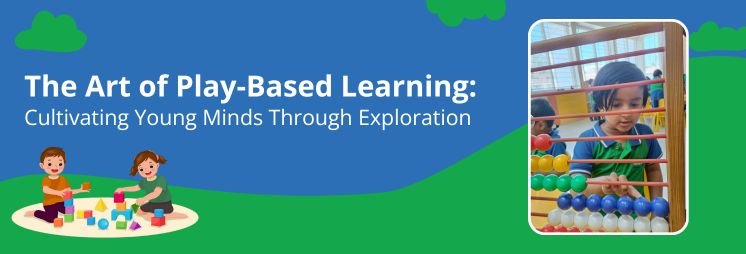
This approach to early childhood education (ECE) isn’t just about fun and games; it’s a powerful tool for fostering cognitive, social, emotional, and physical development in young children. Think beyond entertainment. Play is a natural state for young children, and through it, they: Early childhood classrooms should be designed to encourage exploration. Here are some key elements: The Benefits of Play-Based Learning By incorporating play-based learning, we create a stimulating environment where children can: Play-based learning is an investment in a child’s future. By providing opportunities for exploration and discovery, we equip them with the skills and confidence they need to thrive in school and beyond. Dr. Santoshi Singh, as a champion of education, I encourage you to explore the power of play-based learning. It’s a joyful approach that lays the foundation for lifelong learning and success.
Setting Realistic Expectations: What Preschool Isn’t
Preschool is an exciting time for both parents and children! But with all that excitement, high expectations can sometimes lead to disappointment. Let’s explore some common misconceptions and help parents align their goals with the true purpose of preschool: What Preschool Isn’t: What to Expect Instead: By aligning your expectations with the true purpose of preschool, you can create a smoother transition for your child and maximize the benefits they reap. #preschooladvice #earlychildhoodeducation #parentingtips #realisticgoals
Fueling Little Bodies, Big Adventures: A Guide to Balanced Diets for Preschoolers
Preschoolers are on the move! From climbing the jungle gym to exploring the world around them, their little bodies require a steady stream of energy derived from a balanced diet. Just like building blocks, the right mix of healthy foods provides the essential nutrients they need to grow, learn, and thrive. Why Balance Matters: A balanced diet for preschoolers incorporates a variety of foods from all food groups: Introducing Healthy Foods – A Recipe for Success: Common Mealtime Challenges and How to Tackle Them: Consistency is key! Be patient, offer praise for trying new things, and focus on making mealtimes a positive and enjoyable experience. By working together, you can help your preschooler develop healthy eating habits that will last a lifetime.
The Superpower Squad: Essential Qualities of Effective Preschool Teachers

Preschool teachers are more than just instructors; they’re nurturers, cheerleaders, and guides who shape young minds during a critical developmental stage. But what exactly sets an effective preschool teacher apart? It’s a unique blend of key qualities – patience, creativity, empathy, and organization – that creates the perfect environment for little learners to blossom. The Superpower Squad: Assessing Your Superpowers: Now, let’s explore how you can assess and refine these essential skills: Power Up Your Skills: Remember, being an effective preschool teacher is a continuous learning journey. By honing these core qualities and actively seeking opportunities for growth, you can create a classroom that fosters a love of learning and empowers young minds to reach their full potential.
5 strategies for incorporating social-emotional learning into your classroom
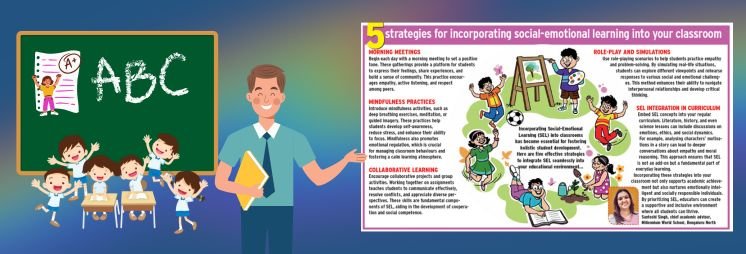
Begin each day with a morning meeting to set a positive tone. These gatherings provide a platform for students to express their feelings, share experiences, and build a sense of community. This practice encourages empathy, active listening, and respect among peers. Introduce mindfulness activities, such as deep breathing exercises, meditation, or guided imagery. These practices help students develop self-awareness, reduce stress, and enhance their ability to focus. Mindfulness also promotes emotional regulation, which is crucial for managing classroom behaviours and fostering a calm learning atmosphere. Encourage collaborative projects and group activities. Working together on assignments teaches students to communicate effectively, resolve conflicts, and appreciate diverse perspectives. These skills are fundamental components of SEL, aiding in the development of cooperation and social competence Use role-playing scenarios to help students practice empathy and problem-solving. By simulating real-life situations, students can explore different viewpoints and rehearse responses to various social and emotional challenges. This method enhances their ability to navigate interpersonal relationships and develop critical thinking. Embed SEL concepts into your regular curriculum. Literature, history, and even science lessons can include discussions on emotions, ethics, and social dynamics. For example, analysing characters’ motivations in a story can lead to deeper conversations about empathy and moral reasoning. This approach ensures that SEL is not an add-on but a fundamental part of everyday learning Incorporating these strategies into your classroom not only supports academic achievement but also nurtures emotionally intelligent and socially responsible individuals. By prioritizing SEL, educators can create a supportive and inclusive environment where all students can thrive.
Tiny Ears, Big Ideas: Effective Communication with Young Children
The world of a young child is a whirlwind of emotions, curiosities, and boundless energy. Communication is key to navigating this exciting yet challenging stage. Here are some tips to help you connect with your child in a way that fosters listening, expression, and positive behavior at home and in the classroom: Get Down to Their Level (Literally and Figuratively): Active Listening – The Art of Really Hearing: Turning Tantrums into Teachable Moments: Positive Reinforcement is Your Friend: Communication is a two-way street. Be patient, create a safe space for open communication, and celebrate their attempts to express themselves. By incorporating these tips, you can foster a positive and enriching communication environment that benefits your child at home and in the classroom.
From Tiny Sprouts to Big Learners: Preparing Your Child for Kindergarten
The transition from preschool to kindergarten is a big step for little ones. A new environment, routines, and expectations can bring excitement and nervousness in equal measure. Here are some practical tips and activities to help your child blossom in kindergarten: Building Confidence and Independence: Sharpening Academic Skills (playfully!): Social and Emotional Readiness: Exploring the New Environment (if possible): The transition to kindergarten is a team effort. Communicate openly with your child’s preschool teacher and the kindergarten teachers. Celebrate your child’s milestones and focus on the positive aspects of this new adventure. With these tips and your unwavering support, your little one will be ready to blossom in kindergarten!
Building Little Hearts: Strategies for Emotional Intelligence in Preschoolers
Preschool is a whirlwind of emotions – joy at playtime, frustration when things don’t go their way, and shyness around new faces. Helping young children navigate this emotional landscape is crucial for developing emotional intelligence (EQ). Here are some strategies to nurture EQ in your preschooler: 1. Name It to Tame It: Young children often struggle to express their emotions clearly. Help them identify their feelings by using simple language like “happy,” “sad,” “angry,” or “frustrated.” Say things like, “I see you’re frowning, are you feeling frustrated because you can’t reach that toy?” This validation helps them understand their own emotions. 2. Mirror, Mirror on the Wall: Children learn through observation. When your child expresses an emotion, reflect it back to them in a calm and accepting way. For example, if they’re crying after a fall, say, “I see you’re crying, it looks like you hurt your knee. That must be frustrating.” This shows them their feelings are valid and encourages them to express themselves openly. 3. The Power of Pause: In the heat of the moment, it’s easy for big emotions to take over. Teach your child calming techniques like taking deep breaths, counting to ten, or squeezing a stress ball. This “pause” allows them to regulate their emotions before reacting impulsively. 4. Stories Spark Empathy: Read books with your child that explore different emotions. Discuss how characters feel and why. Ask questions like “How do you think the puppy feels when he loses his bone?” This helps them develop empathy and understand how their actions affect others. 5. Role-Playing Rescue: Practice social skills through role-playing. Act out scenarios where your child needs to share, take turns, or apologize. This allows them to experiment with different responses in a safe environment. 6. The “Feelings Chart” Friend: Create a visual chart with pictures of different emotions. When your child has a strong emotion, point to the chart and discuss it together. This can be a helpful reference point for them to identify and understand their feelings. Developing EQ is a journey. Be patient, celebrate small victories, and use these strategies consistently. By nurturing their emotional intelligence, you’re helping your preschooler build the foundation for strong social connections, healthy emotional regulation, and a successful future.
Play-Based Learning: How It Shapes Cognitive and Social Development in Preschoolers
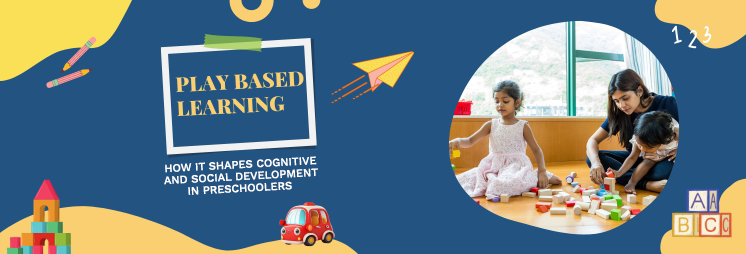
For many, playtime conjures up images of carefree fun. But for preschoolers, play is much more than just a leisure activity – it’s a powerful tool for learning and development. Play-based learning is an educational approach that recognizes the profound impact of play on a child’s cognitive and social skills. Why Play Matters Preschoolers are naturally curious and eager to explore the world around them. Play provides a safe and engaging environment for this exploration to take place. Through play, children: The Science Behind the Play The benefits of play-based learning are backed by science. During play, the brain forms new neural connections, strengthening memory and information processing. Play also stimulates the release of dopamine, a neurotransmitter crucial for motivation and learning. Making Play-Based Learning a Reality There are many ways to incorporate play-based learning into a preschooler’s routine: Play-based learning isn’t just about keeping children entertained; it’s about unlocking their full potential. By providing opportunities for playful exploration, we can nurture curious, creative, and well-rounded individuals ready to thrive in the years to come.
Things to Try Before You Quit Teaching

Teaching can be a challenging and demanding profession, often leading educators to contemplate leaving the field. Before making a final decision, consider trying these strategies to reignite your passion for teaching: 1. Seek Professional Development: Enroll in workshops, courses, or seminars that focus on areas of interest or new teaching methods. Learning new strategies and staying updated with educational trends can rejuvenate your enthusiasm and effectiveness in the classroom. 2. Connect with a Mentor: Find a mentor or a supportive colleague who can provide guidance, share experiences, and offer advice. A mentor can help you navigate challenges, offer fresh perspectives, and remind you why you entered the profession in the first place. 3. Join a Support Network: Participate in teacher support groups, either locally or online. Sharing your experiences and hearing from others in similar situations can provide comfort and practical solutions. Sometimes, knowing you’re not alone can make a significant difference. 4. Focus on Self-Care: Prioritize your well-being by maintaining a healthy work-life balance. Engage in activities you enjoy, practice mindfulness, exercise regularly, and ensure you get enough rest. A well-balanced lifestyle can improve your resilience and outlook on teaching. 5. Try a Different Grade or Subject: If possible, request a transfer to a different grade level or subject area. A change in environment or curriculum might reignite your passion and bring a fresh perspective to your teaching career. 6. Incorporate Student Feedback: Seek feedback from your students about what they enjoy and what could be improved in your classroom. Understanding their perspectives can help you make meaningful adjustments and see the positive impact you’re making. 7. Reflect on Your Achievements: Take time to reflect on the positive impacts you’ve had on your students. Celebrate your successes, no matter how small. Reminding yourself of the difference you’ve made can renew your sense of purpose. 8. Experiment with New Teaching Techniques: Explore innovative teaching methods and technologies. Trying new approaches can make teaching more engaging and enjoyable for both you and your students. 9. Consult a Career Counselor: Speak with a career counselor to explore your options within and outside the education field. Sometimes, understanding the full range of possibilities can help you make a more informed decision. 10. Consider a Sabbatical: If possible, take a temporary break from teaching to recharge and gain a fresh perspective. A sabbatical can provide the time needed to reflect on your career and decide on your next steps without the immediate pressures of the classroom. Consider these strategies before making a final decision. They may help you rediscover the joy and fulfillment that initially motivated you to become a teacher.
What are the difficulties of parents of gen alpha?
The term “generation alpha” refers to the group of children born after 2010 who are experiencing issues related to the environment, social media, and digital technology. They are also known as the
iGeneration, the Plurals, or the Centennials. As parents of gen alpha, you might face some difficulties that are different from those of previous generations. Here are some of the common challenges and how to cope with them.